
Research conducted by third party, Zebrafi
Challenge #1: Full Equipment Replacement in a Live Production Environment
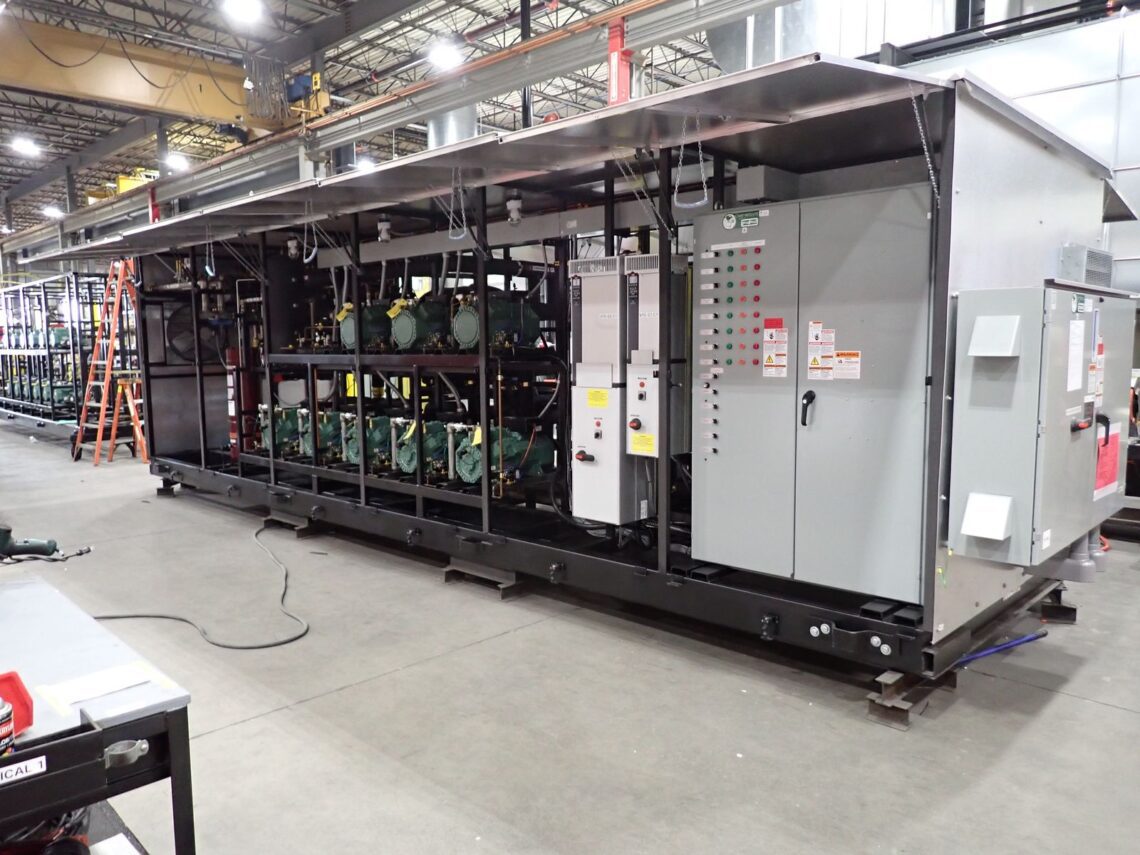
The refrigeration system needed to be replaced under live operating conditions. Any interruption would have resulted in a supply disruption to all of Domino’s facilities in North Carolina.
The financial exposure was significant.
“If you have a project that’s got $50,000 a day liquidated damages… 30 days at $50,000 a day is a big number ($1.5m).”
Production interruption risk was even more severe.
“Whenever you analyze doing a complete equipment replacement project and we’re doing it on a live operational facility… you have to make sure that downtime doesn’t exist.” -Scott Ercole, VP Technical Sales
Solution: Phased Engineering and Coordination Execution
Zero Zone and CoolSys operated as a unified engineering team for Technical Sales eighteen months prior to installation. A detailed phasing plan was engineered to transition coils and bring the new CO₂ rack online without disrupting production.
“We worked together with Zero Zone for a year and a half just in project development… we went through multiple options.”- Scott Ercole
The first major transition occurred under tightly controlled conditions.
“I got that phone call at 4:00 AM on a Sunday morning… ‘Suction pressures are nice and stable, system stable.’ It was such a critical milestone that proved we had prepared the right way.’”
Each transition window required careful coordination. “The transitions had really tight time windows… late Friday night, early Saturday morning. You have to love what you do, to do this.” The outcome was clear. No unplanned production shutdown occurred during the full system transition.
Challenge #2: Extreme Load Variation in a Production Facility
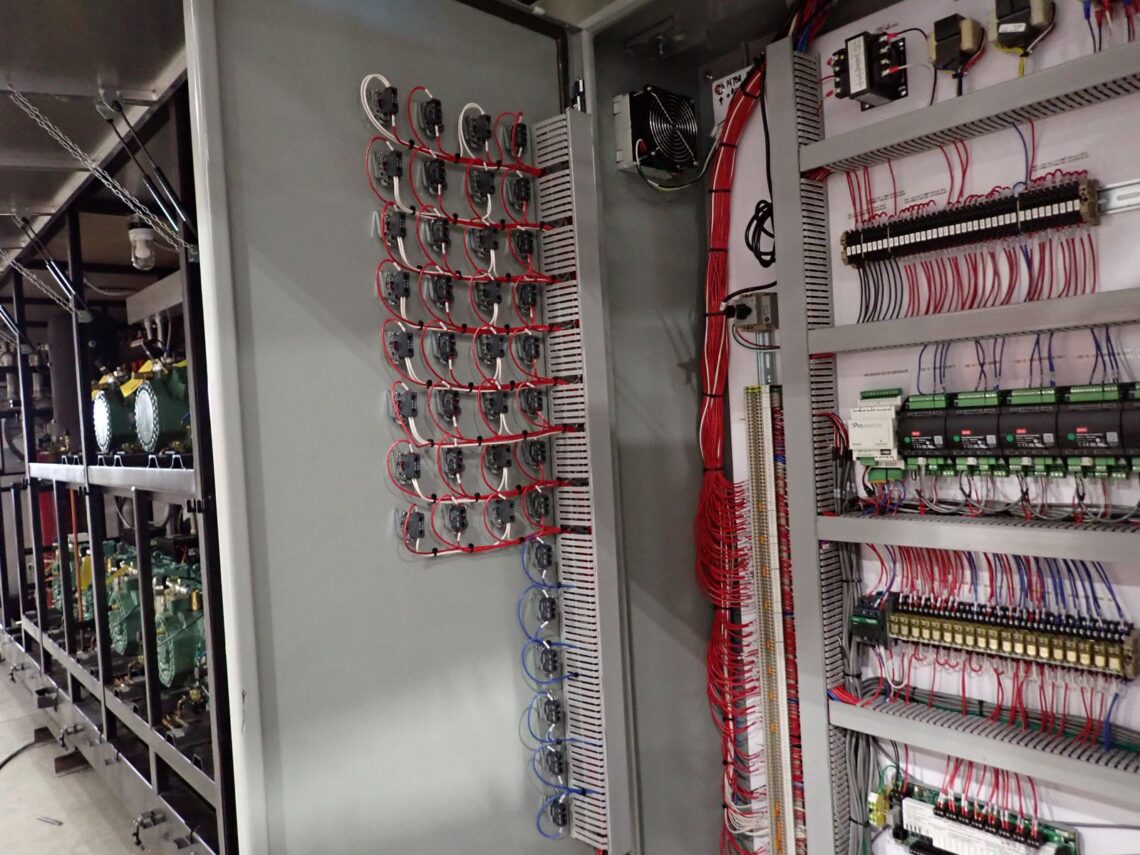
This facility operates under highly variable load conditions. During active production, refrigeration demand spikes. During washdown cycles, the load drops dramatically.
“When it’s in production you’ve got a huge load. As soon as production ends… the majority of the load goes away.”
Designing a system that performs efficiently and remains stable across these extremes requires precision engineering, not standard specification work.
Solution: Engineering Excellence Focused on Optimization
The engineering approach went beyond basic functionality.
“Engineering excellence is engineering something that will work, work well, be optimized, efficient from an energy standpoint, maintenance friendly and drive down total cost of ownership.”
Joint decisions included compressor sizing for wide load swings, controls configuration, startup strategies under minimal load conditions, and hot gas defrost integration. Alignment was continuous. For Domino’s, this meant a system engineered for stability across all operating conditions, reducing the likelihood of operational volatility or performance degradation over time.
Challenge #3: Long-Term Regulatory and Refrigerant Risk
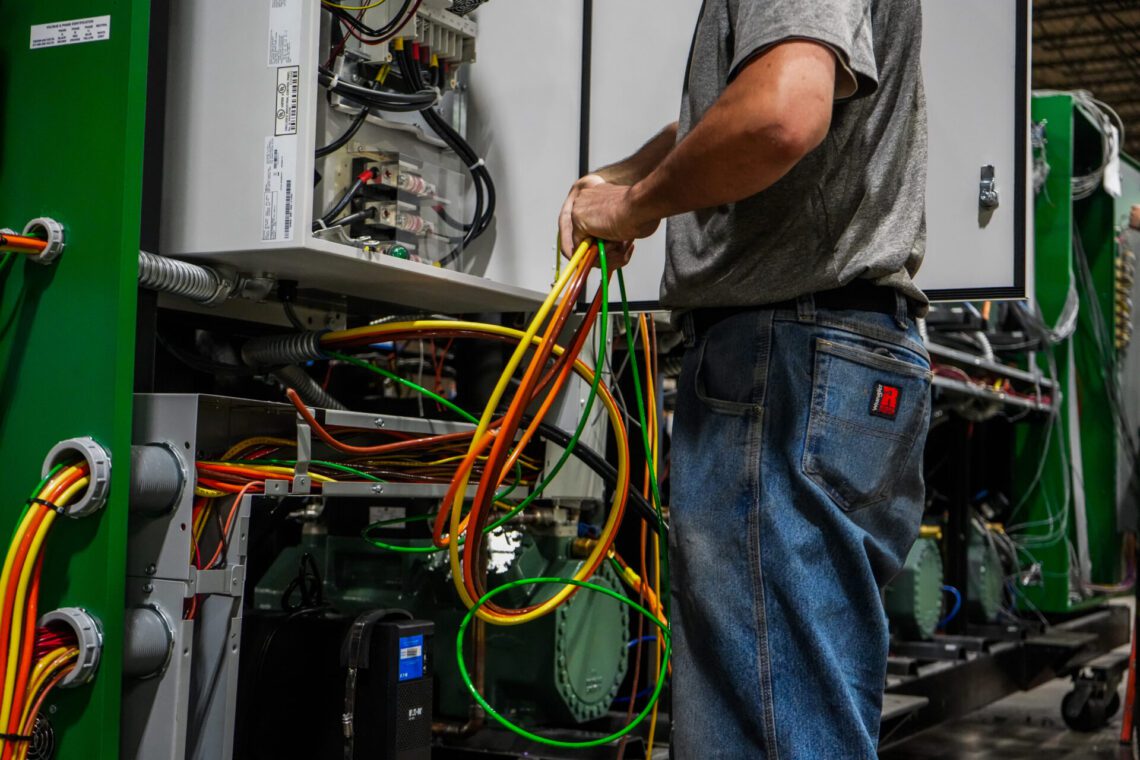
An HFC-based solution was evaluated early in the process. However, long-term
regulatory risk and lifecycle durability were central concerns.
“The customer was looking at an HFC option. We didn’t feel that an HFC option was the best just because of the regulatory landscape.”
The objective was a future-proof refrigeration system.
“We want something that 30 years from now can still be operational and isn’t a headache.”
Solution: CO₂ Platform Designed for Lifecycle Stability
CoolSys recommended and implemented a CO₂ refrigeration system engineered by
Zero Zone for long-term compliance and durability.
This decision reduced:
- future refrigerant transition risk
- potential retrofit exposure
- regulatory uncertainty
- lifecycle replacement cost
By aligning engineering decisions with long-term regulatory trends, Domino’s secured a refrigeration platform designed for decades of operation.
Challenge #4: True Total Cost of Ownership
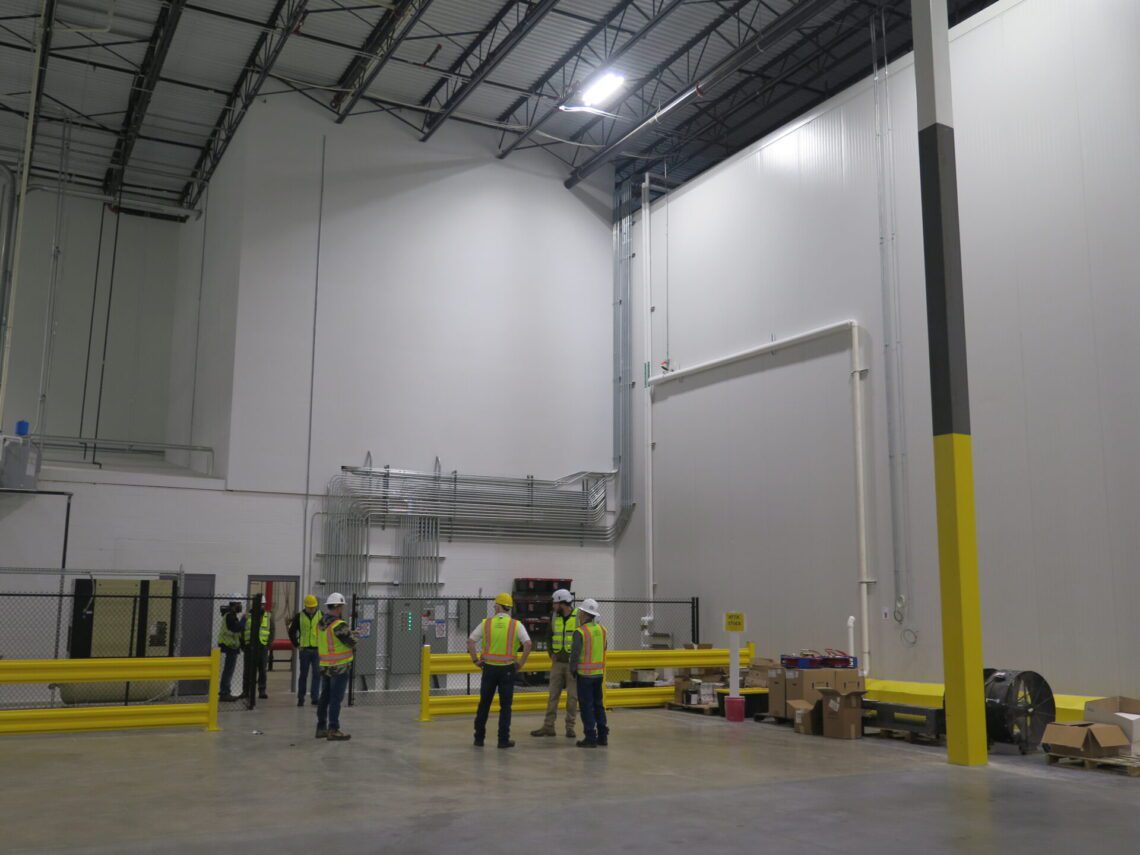
Capital cost pressures are common in large industrial projects. However, refrigeration systems are long-life assets that directly impact energy use, maintenance burden, and production reliability.
“You can’t just look at this upfront cost… that little bit of money you may have saved up front, you burn through that by year three of your 30 years.”
Domino’s required a solution that reduced lifetime risk and operational burden, not simply initial expenditure.
Solution: Coordinated Engineering that Reduces Lifecycle Risk
Startup labor efficiency was addressed directly. “Startup folks are the hardest to come by and they usually have the highest labor rates.” System design simplified field work.
“Valve stations fabricated by Zero Zone usually saves us hours of labor.”
Commissioning efficiencies were estimated to be “At least 10%.” Operational support was equally important. “If there is ever an issue, Zero Zone is there. We don’t send emails or make phone calls that go into a black hole.”
Engineering collaboration alone created measurable lifecycle value because of the critical nature of these projects. “Engineering with Zero Zone offers us significant cost savings… 6–7 figures.”
For Domino’s, this translated to:
• Reduced commissioning risk
• Lower startup labor exposure
• Faster stabilization
• Reduced maintenance friction
• Engineering access when issues arise
• Long-term system durability
Summary of Metrics and Outcomes
•Zero unplanned production shutdowns during transition
•Avoided $50,000 per day liquidated damages exposure
•Approximately 10 percent commissioning efficiency improvement
•Labor hour reduction during startup
•Avoided six-figure production downtime impact
•CO₂ system aligned with long-term regulatory stability
•Designed for 30+ year lifecycle
•Estimated 6-7 figure lifecycle value creation
The Total Cost of Ownership Advantage
This project demonstrates how engineering decisions, coordinated execution, and lifecycle planning influence the total cost of ownership.
For Domino’s, the result was not just a new refrigeration system. It was:
•Protected production continuity
•Controlled financial exposure
•Reduced lifecycle maintenance risk
•Long-term regulatory confidence
•A refrigeration platform built to perform for decades