
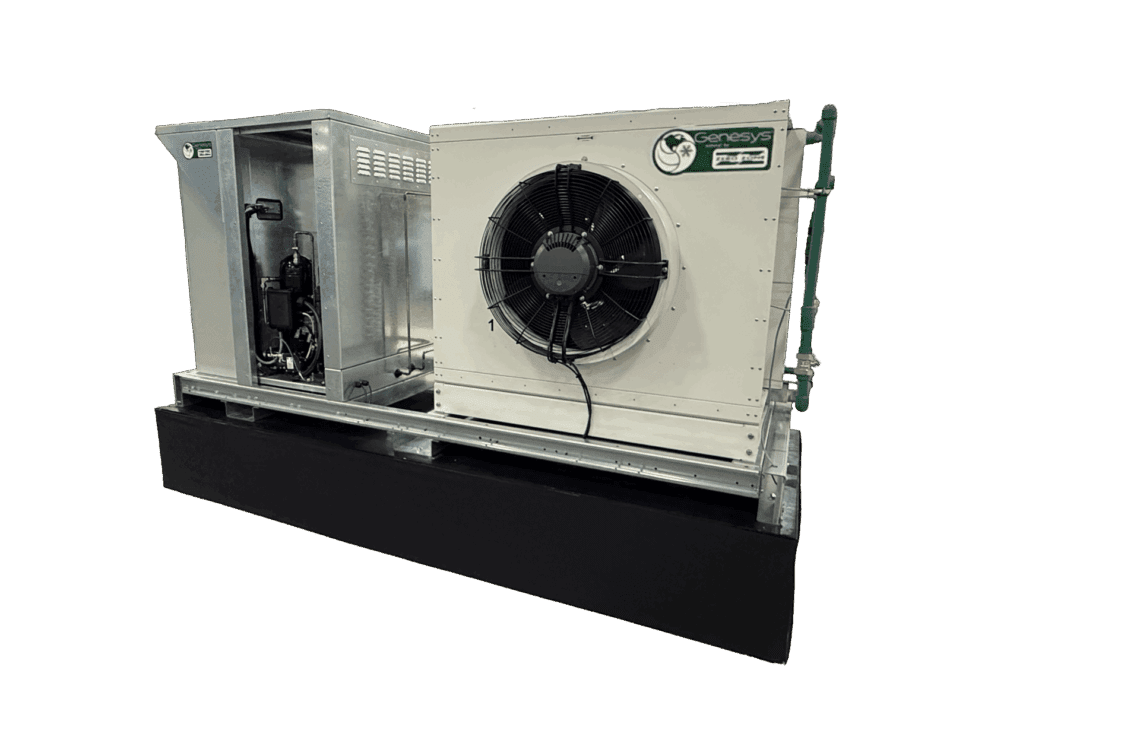
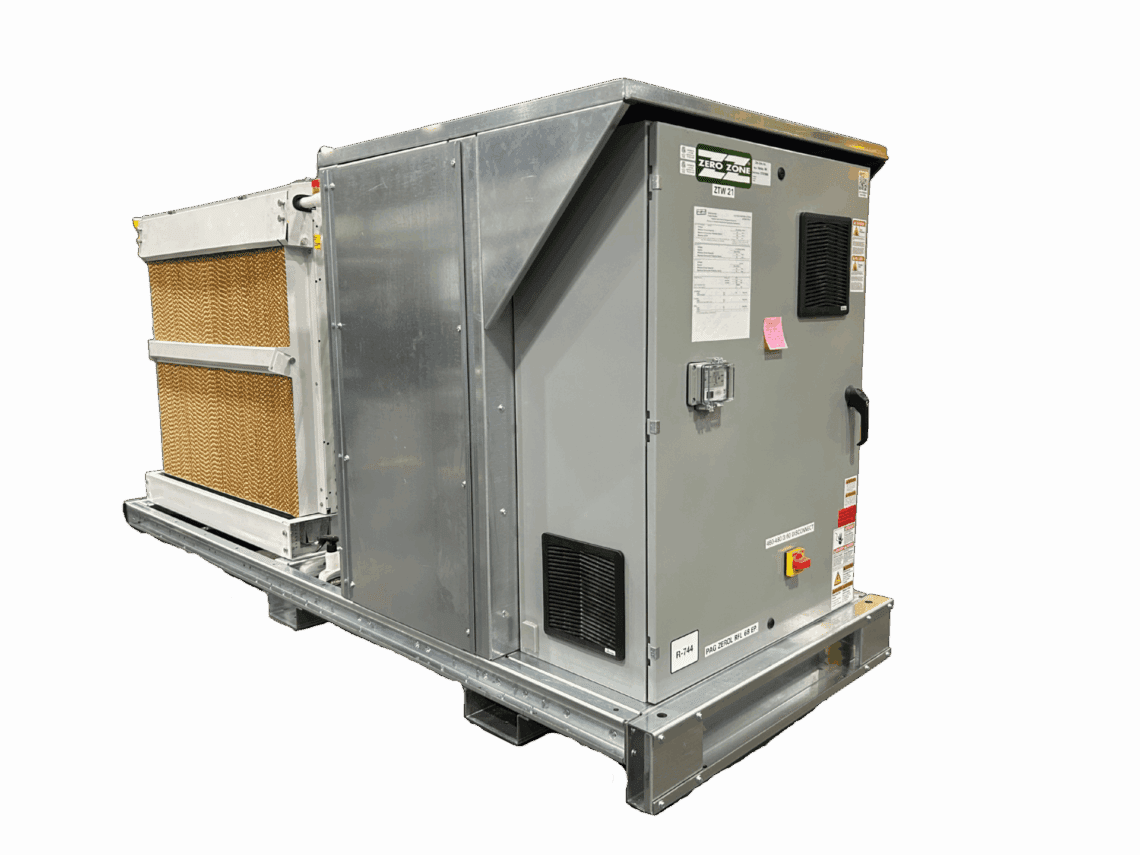
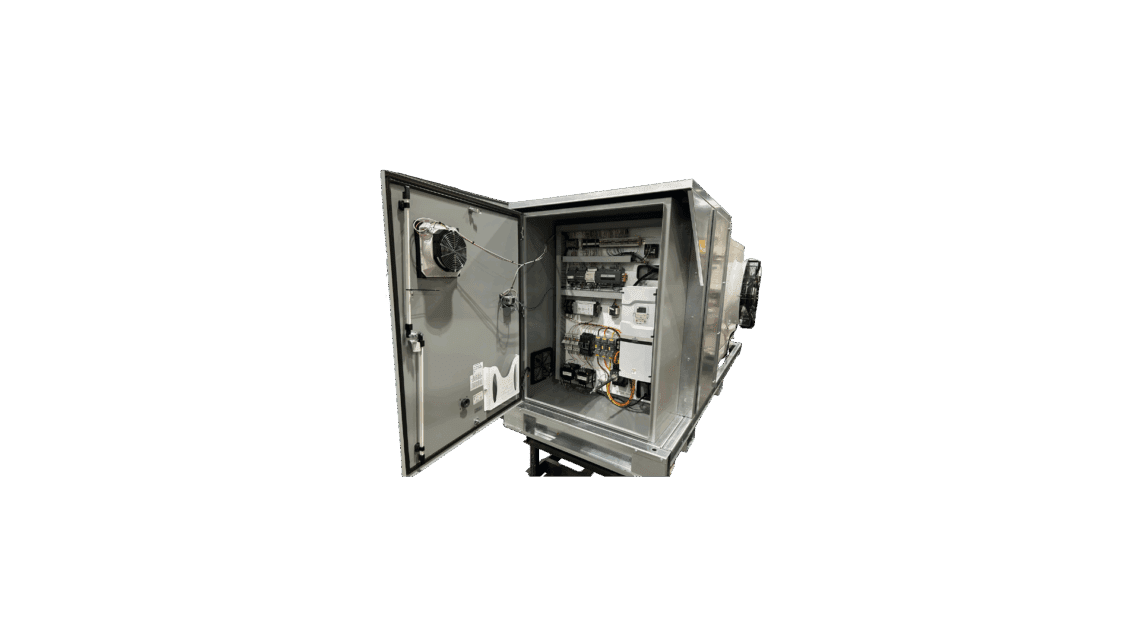

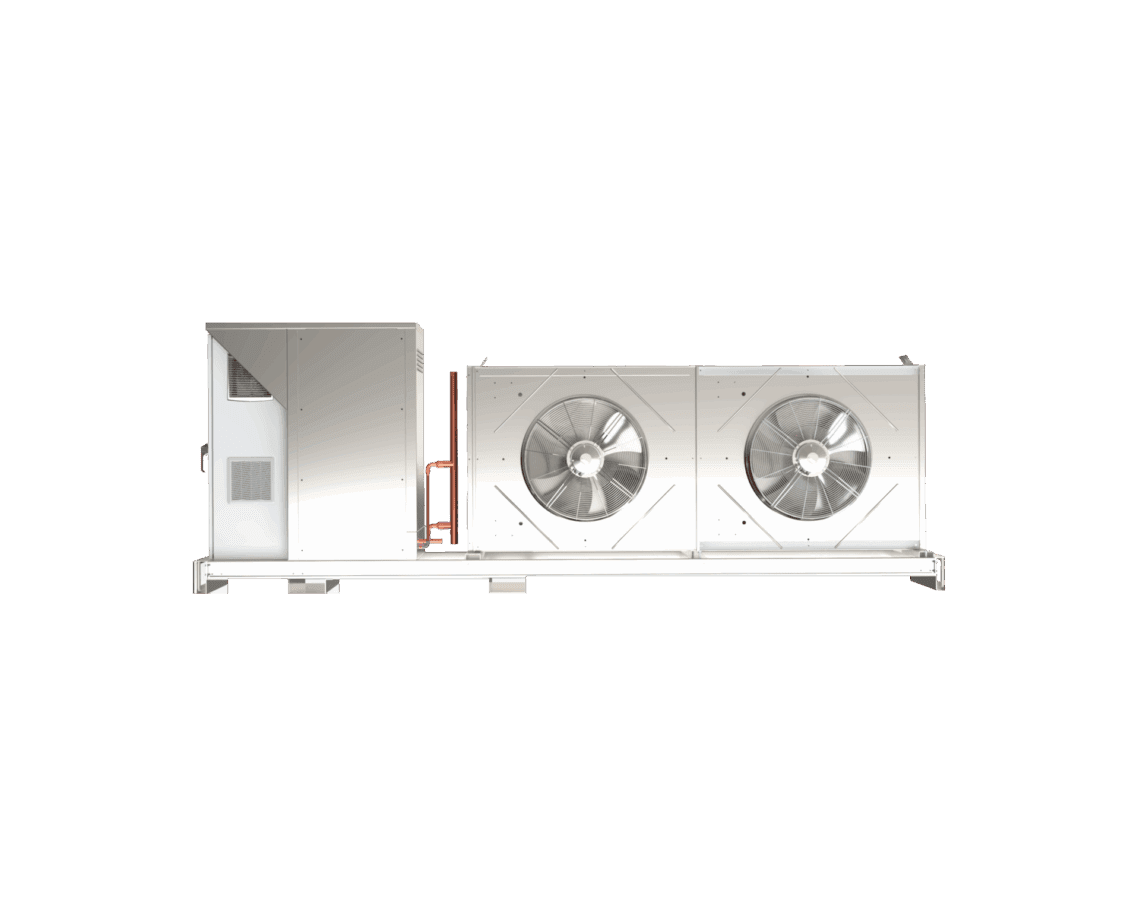
Overview of the CO2 Condensing Unit
Zero Zone is committed to providing innovative refrigeration technologies that meet the evolving needs of businesses. By combining energy efficiency with environmental responsibility, our Edge Compact is a testament to our dedication to a greener future.
Key Features of the Edge Compact
Genesys™ CO2 Edge Compact
Model Numbers |
Gas Cooler |
Capacity @15F (Mbtu/Hr) |
Capacity @30F (Mbtu/Hr) |
Ship Weight (lb) |
Dimensions (LxWxH) |
MCA |
MOPD |
|---|---|---|---|---|---|---|---|
CNDU-02-M-4 |
Dry |
35 |
40 |
1,900 |
121 x 43 x 57 |
52 |
80 |
CNDU-02-M-5 |
Dry |
47 |
53 |
2,000 |
121 x 43 x 57 |
62 |
100 |
CNDU-02-M-7 |
Dry |
64 |
73 |
2,400 |
174 x 43 x 57 |
73 |
125 |
CNDU-02-M-9 |
Dry |
84 |
96 |
2,600 |
174 x 43 x 57 |
77 |
125 |
CNDU-01-M-4 |
Adiabatic |
52 |
60 |
2,000 |
121 x 43 x 59 |
52 |
80 |
CNDU-01-M-5 |
Adiabatic |
69 |
80 |
2,200 |
121 x 43 x 59 |
62 |
100 |
CNDU-01-M-7 |
Adiabatic |
94 |
108 |
2,700 |
121 x 43 x 59 |
73 |
125 |
CNDU-01-M-9 |
Adiabatic |
123 |
142 |
2,900 |
121 x 43 x 59 |
77 |
125 |
Model
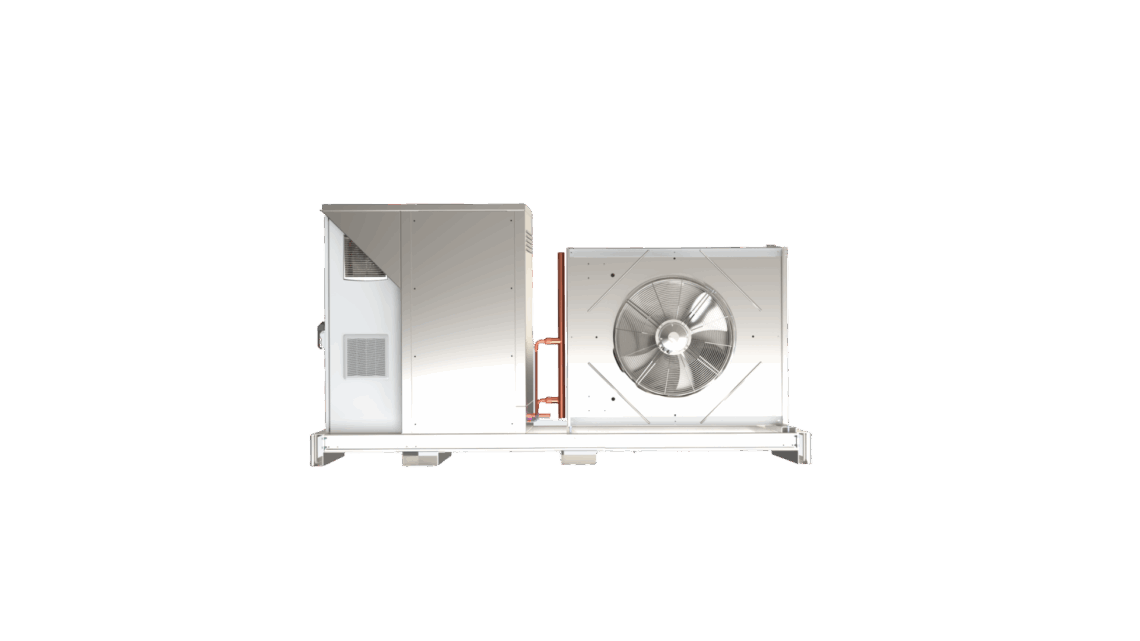
The critical point of CO2 is 87.8°F. Subcritical systems stay below this temperature, using a condenser to transition co2 from gas to liquid. Transcritical systems exceed the critical point, using a gas cooler instead of a condenser. Liquid refrigerants operate at a lower pressure, making them more energy efficient.
Transcritical CO2 Condensing Units are designed for 130/90-Bar rating.
These condensing units are ideal for stores or applications that require less tonnage of refrigeration such as a convenience store or drug store.
TCO2 condensing unit refrigeration systems can operate from -20°F to 105°F.