
Seismic Anchors: Why Requirements Change by Seismic Zone
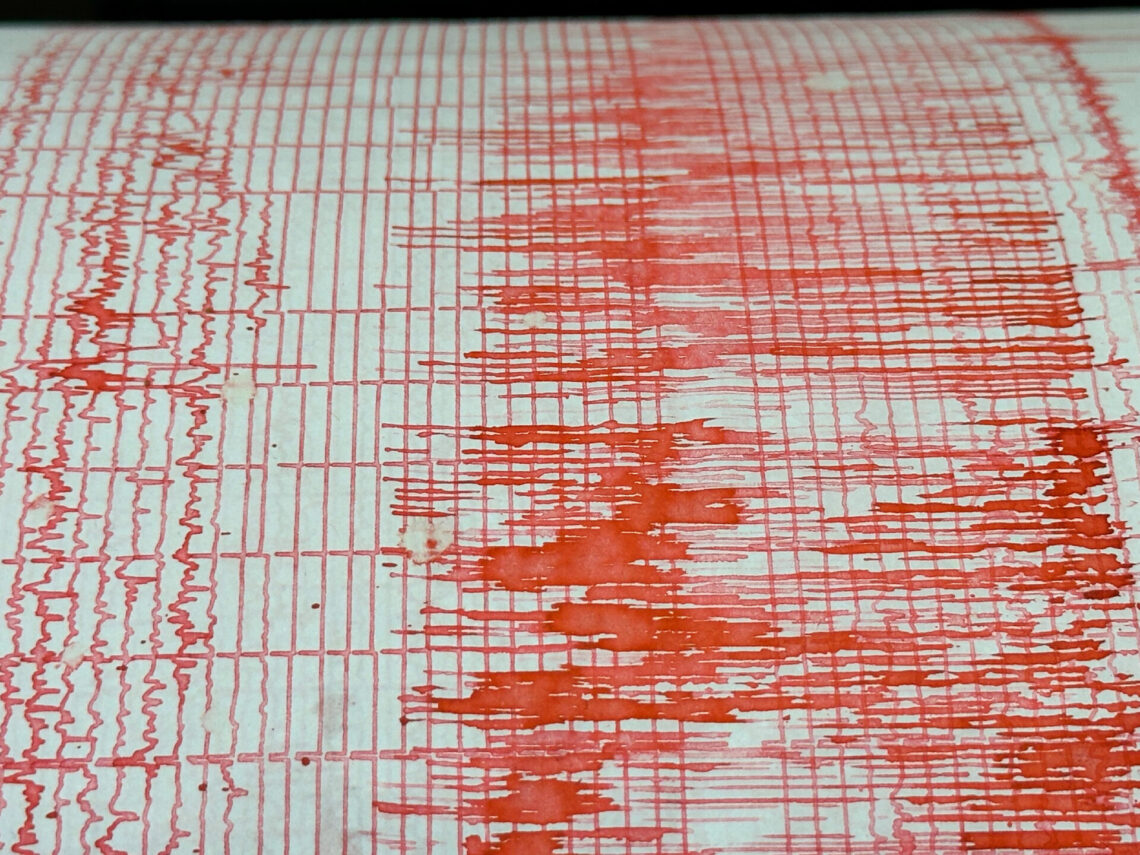
Seismic anchoring requirements vary because seismic forces are not uniform. Ground motion, soil behavior, and structural response change by location, and anchoring systems are designed to match those conditions.
Seismic design is not defined by magnitude alone. It is driven by how quickly the ground accelerates, how frequently motion reverses direction, and how long those forces are applied. Ground movement occurs in horizontal, vertical, and rotational directions, with intensity varying by region.
Seismic zones reflect expected ground acceleration, shaking duration, regional fault behavior, and local soil conditions. These variables determine the forces that anchored equipment must resist.
How Seismic Motion Affects Anchored Equipment
During a seismic event, refrigerated display cases behave as a mass on a moving surface. As the ground accelerates, inertia resists that motion. When direction reverses, the seismic force reverses. This cycle repeats over the duration of the event.
Rather than attempting to eliminate motion, building codes focus on controlling it. Seismic anchoring systems are how design-level seismic forces are safely managed.
What Seismic Anchors Are Designed to Do
Seismic anchors are not intended to eliminate movement. They are designed to control it.
Anchoring systems are engineered to:
- Control displacement
- Prevent sliding and overturning
- Maintain predictable transfer of seismic forces
- Transfer forces into the supporting concrete without failure.
Performance is defined by how consistently the system manages repeated force reversals.
Anchor performance is governed by how forces are transferred into the concrete and how those forces are resisted over repeated tensile demands.
When anchoring systems are undersized or improperly installed, failure typically occurs in one of three ways: anchor pull-out under tensile forces, concrete breakout around the anchor, or shear failure at the base. Under cyclic force demands, these failures can develop progressively as materials fatigue rather than occurring as a single event.
Seismic anchoring design accounts for these behaviors by ensuring that the transfer of forces remains intact and that both anchor and surrounding concrete can sustain repeated force reversals without loss of capacity.
Why Anchor Requirements Change by Seismic Zone
As seismic design categories increase, force demand increases.
Higher seismic zones introduce:
- Greater tensile forces acting on anchors
- Increased shear forces at the base
- Repeated force reversals over longer durations
- Elevated fatigue demand on steel and concrete
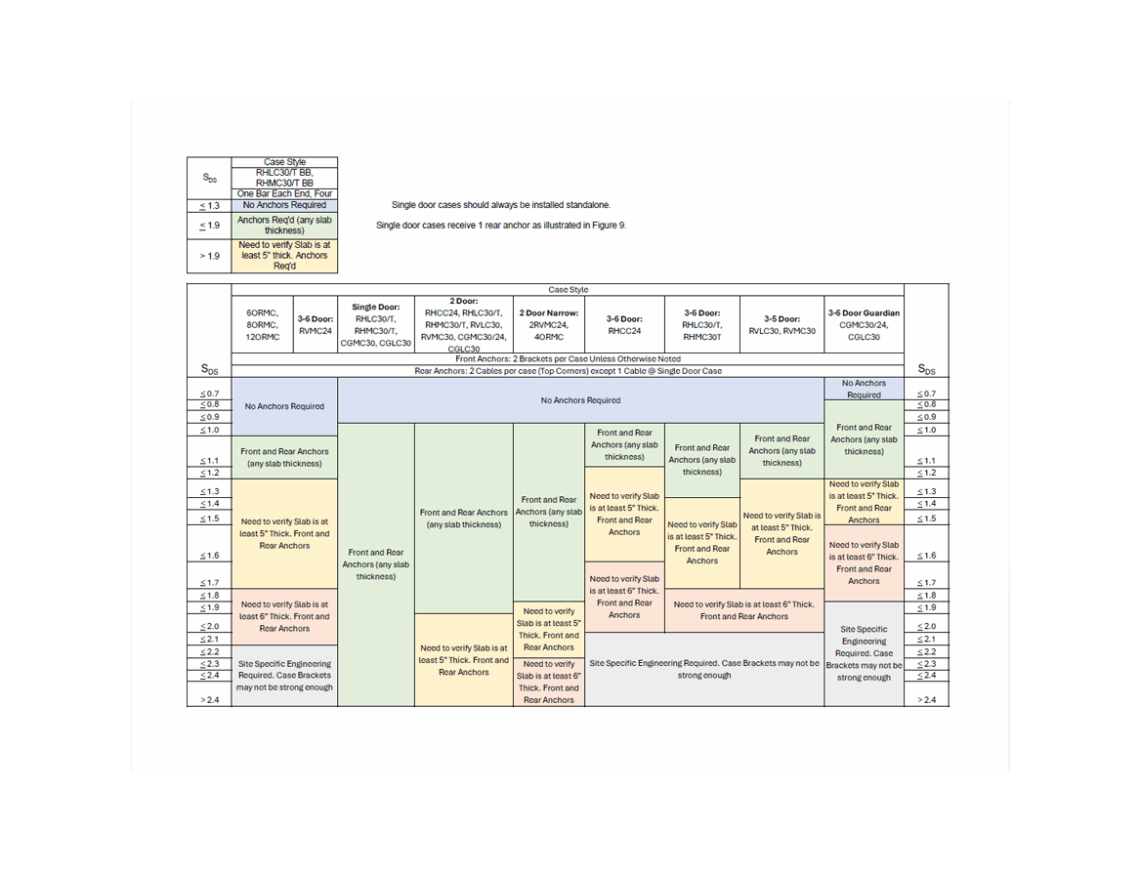
These conditions require changes in anchor size, type, spacing, and embedment depth. Configurations that perform adequately in lower seismic zones may not meet performance requirements in higher seismic zones.
The Impact of Soil and Slab Conditions
Seismic zone classification alone does not define anchoring requirements. Local site conditions directly influence system behavior.
Anchoring performance is affected by:
- Slab thickness and concrete strength
- Reinforcement within the slab
- Soil classification beneath the structure
Softer soils can amplify seismic motion, increasing displacement and force demand. Rigid soils and rock transmit motion differently, often producing sharper force transfer with less amplification.
Anchors rely on the surrounding concrete to resist applied forces. The response of the slab under the seismic conditions is integral to anchoring performance.
Standardization Within Defined Limits
Anchoring requirements are not defined by equipment alone. They are defined by how the installed system is expected to behave under seismic forces. The same display case can experience different force demands depending on location, ground motion characteristics, and how seismic energy is transferred into the structure.
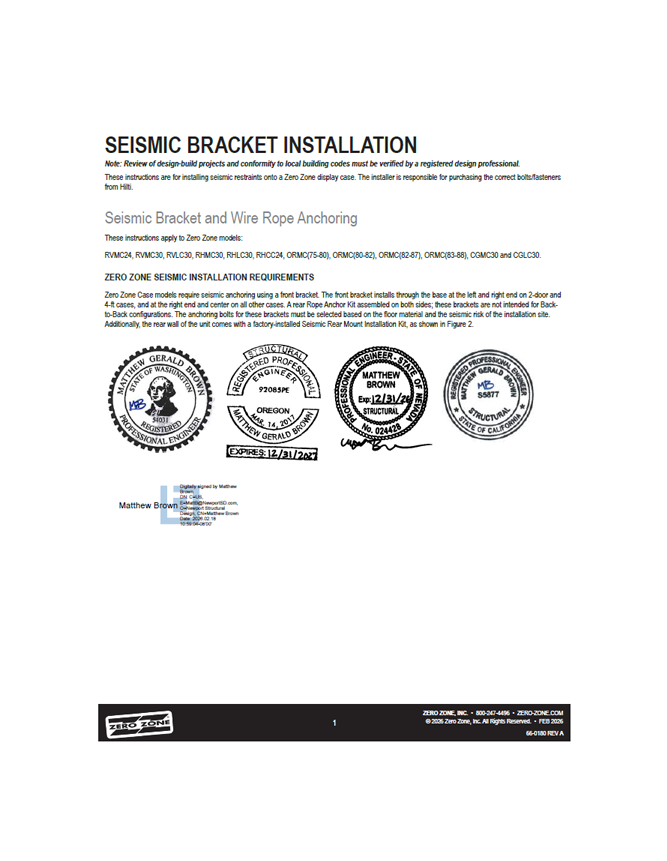
Zero Zone approaches seismic anchoring through standardized guidance within defined application limits. Our seismic anchoring instructions are reviewed and stamped by a registered structural engineer to support installations that fall within documented seismic parameters.
Site-specific conditions and code requirements ultimately govern anchor selection and approval. Final compliance remains with the responsibility of the Engineer of Record.
Seismic Anchoring Principles
Seismic anchoring is a system-level response to expected conditions. As those conditions change, anchoring requirements change with them.
Designing for seismic forces is not about preventing motion. It is about controlling how that motion is transferred, resisted, and resolved within the system.
When anchoring performance is aligned with actual site conditions, equipment stability, inspection outcomes, and long-term system behavior remain predictable under seismic forces.
For more information about Zero Zone and our products, visit our products page or contact a Zero Zone representative.