
Distributed vs. Decentralized Refrigeration Systems: Key Differences in Modern System Design
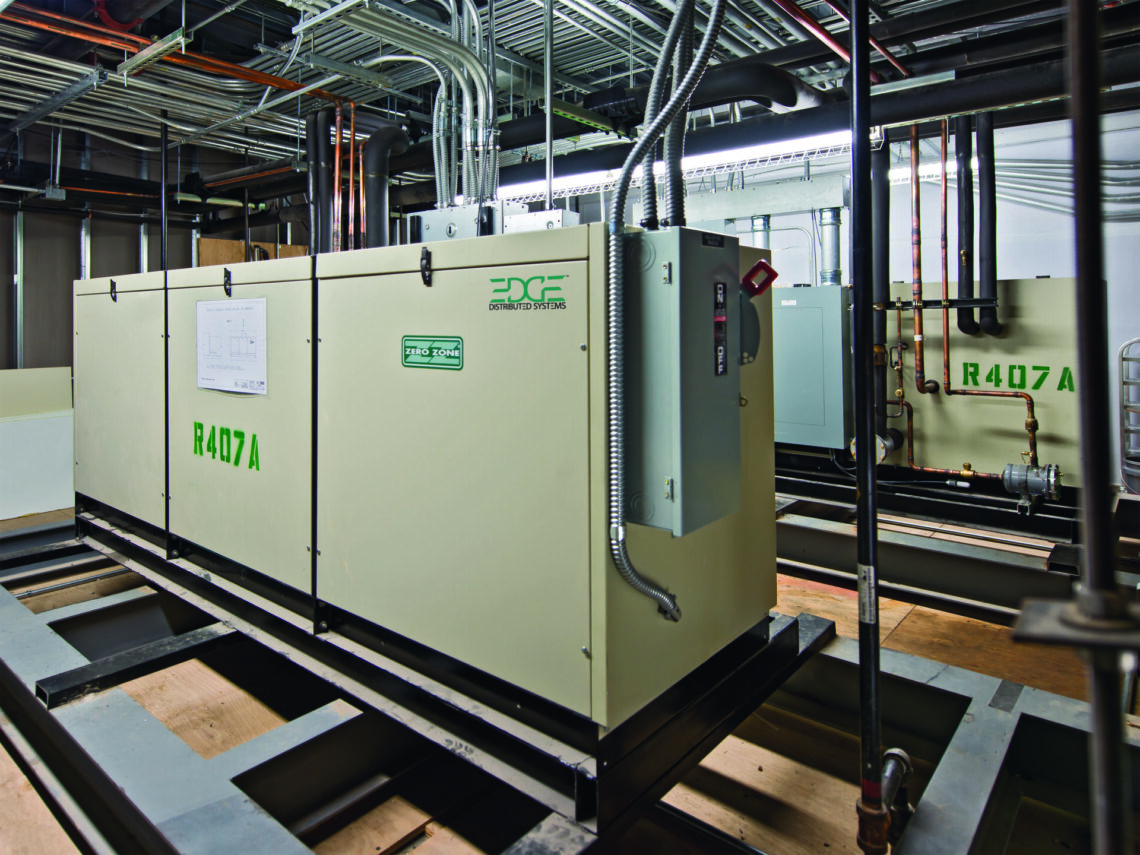
Refrigeration system design has shifted significantly over the past decade. As facilities grow more complex and performance expectations increase, system architecture has become a defining element of refrigeration design. Where refrigeration capacity sits, how it is controlled, and how it is serviced all influence outcomes that matter long after startup: stability, maintainability, expansion flexibility, and overall operating strategy.
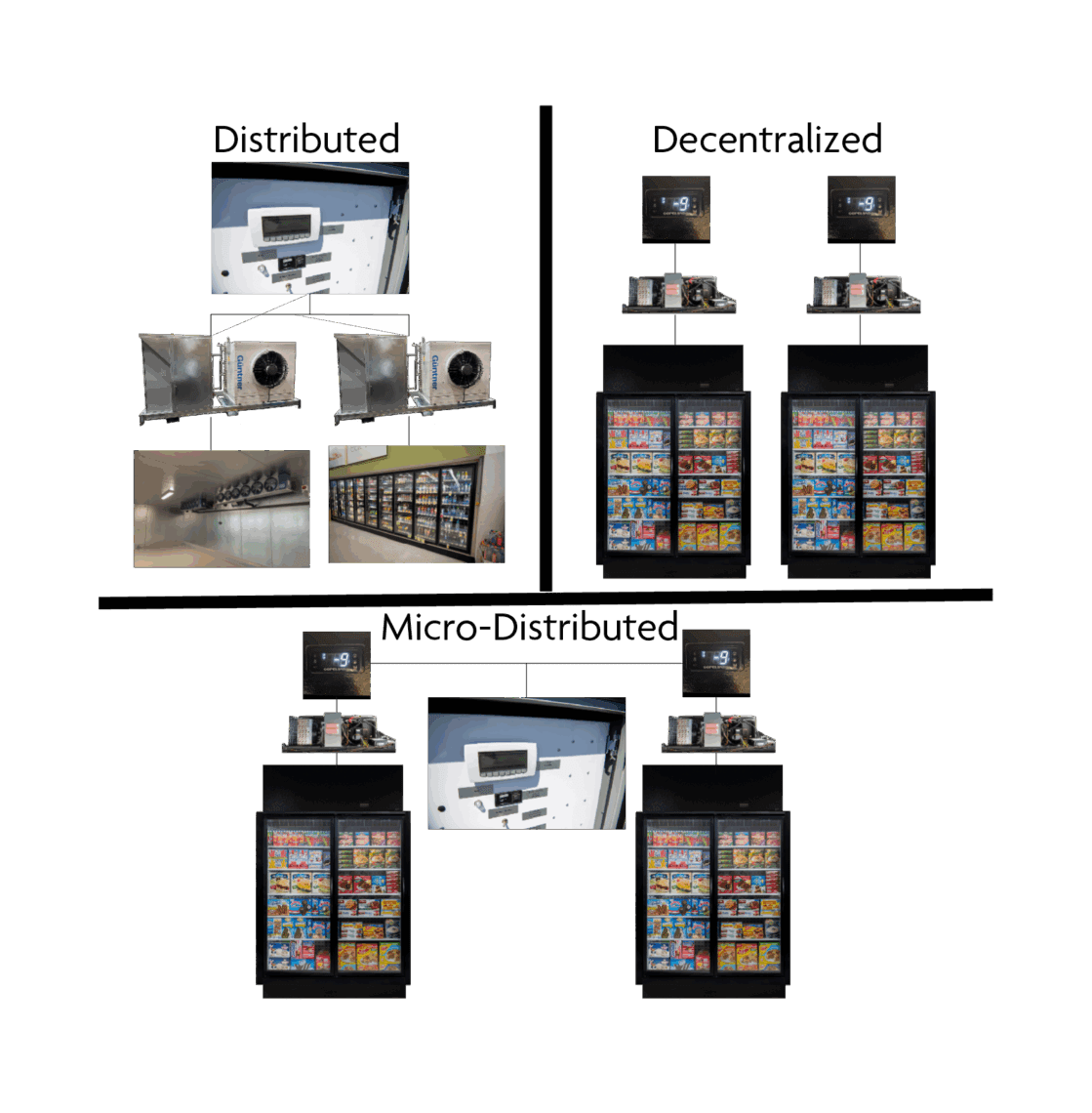
Designers, end users, and regulators distinguish between centralized, distributed, and decentralized refrigeration systems. Yet distributed and decentralized are still frequently used interchangeably, despite representing fundamentally different approaches to how refrigeration capacity is applied, managed, and supported.
Architecture decisions directly influence refrigerant charge, energy performance, reliability, service strategy, and long-term operational flexibility. While both distributed and decentralized systems reduce reliance on traditional centralized rack systems, they are not variations of the same model. Each is built around different engineering priorities and is intended to solve different challenges.
What is a Distributed Refrigeration System?
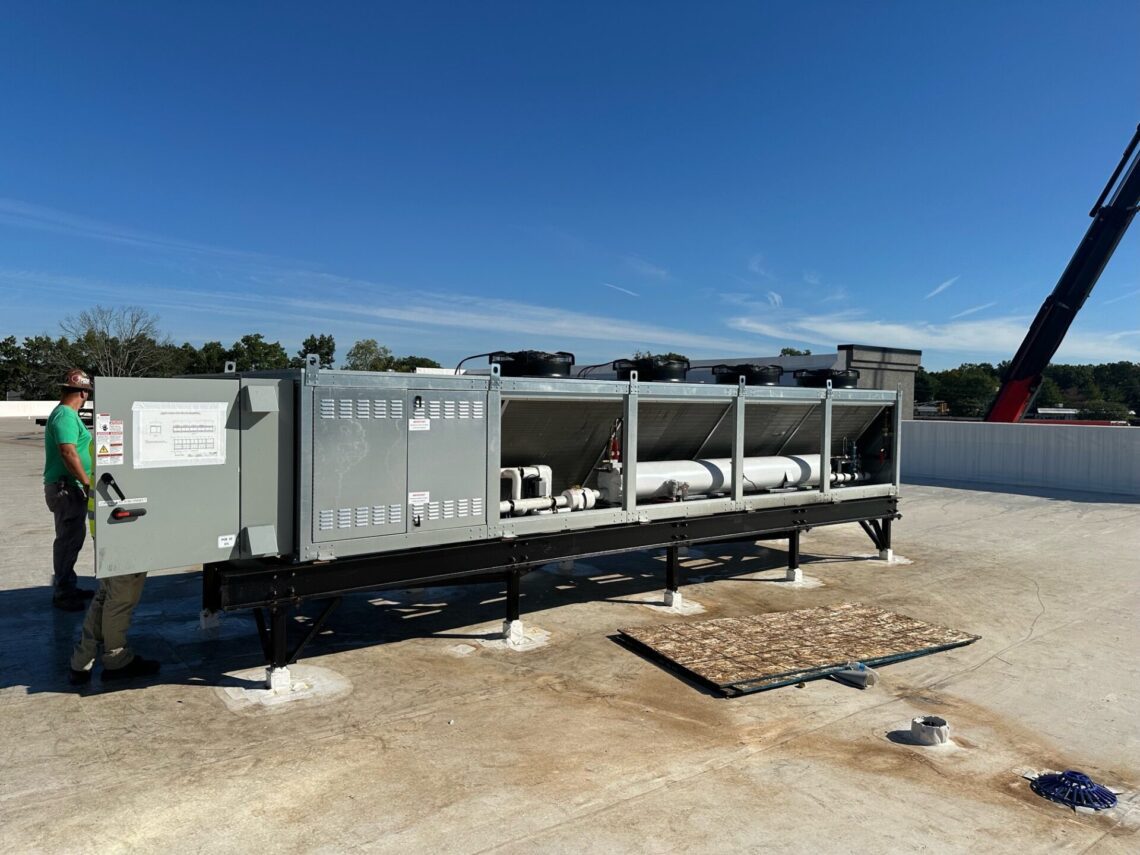
A distributed refrigeration system divides refrigeration capacity across multiple smaller systems placed closer to the cooling load, rather than relying on a single large, centralized rack. Each system is typically assigned to a defined scope—walk-in coolers and freezers, a group of display cases, or a section of a store—so the overall piping can be reduced.
The defining feature is that these systems are still engineered as coordinated architecture. Controls, staging logic, and operating strategies are designed to work together. Depending on the application, distributed systems may also share or coordinate heat rejection strategies, allowing the overall system to be optimized instead of treated as a collection of unrelated units.
In practical terms, distributed architecture is often used to reduce piping and refrigerant charge while preserving system-level design intent—how capacity is staged, how pressure is managed, and how the system responds under variable load.
What is a Decentralized Refrigeration System?
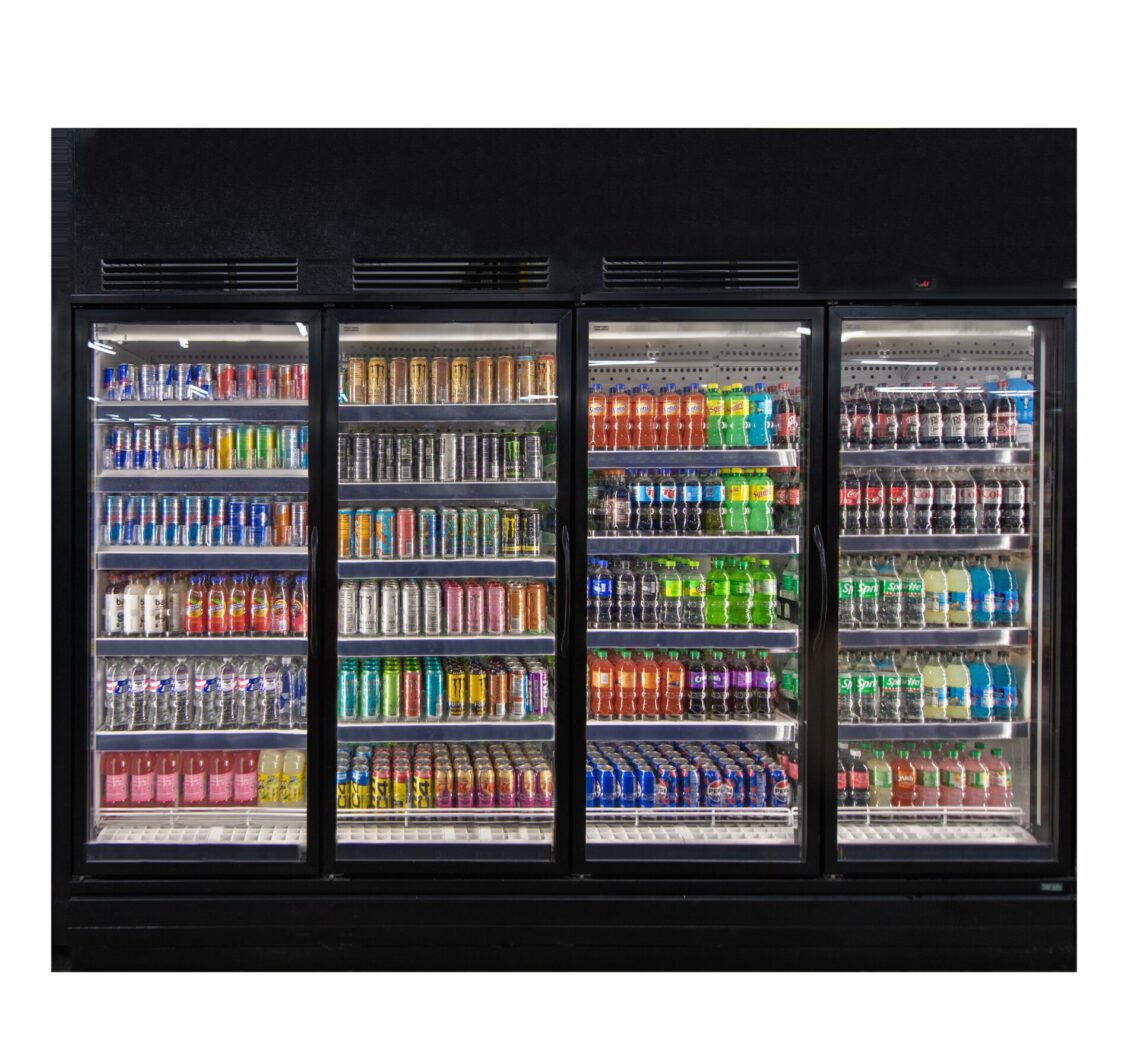
A decentralized refrigeration system consists of fully independent, self-contained units. Each unit operates autonomously with its own compressor, dedicated controls, and heat rejection. There is no system-level coordination, no shared operating strategy, and no centralized logic managing performance across multiple units.
This approach is common in self-contained equipment, especially applications where small charge sizes are a primary requirement. In these designs, every unit responds only to its local conditions and local load—simple by nature but also limited in how much system-wide optimization can be applied.
Decentralized systems are often selected for their installation simplicity, layout flexibility, and containment of failures to individual pieces of equipment.
Key Differences that Drive Real-World Outcomes
Refrigerant charge: reduced vs. minimized
Controls and Optimization: Coordinated vs. Local
Performance and Efficiency: System Behavior vs. Component Behavior
Reliability and Service Strategy: Fewer Critical Points vs. More Touchpoints
Distributed architectures reduce the “single point of failure” problem seen in large, centralized rack systems. If one module is down, impact can often be limited to a portion of the load rather than the entire site. Service strategies can also be standardized across fewer system types.
Decentralized architecture isolates failures even further—often down to a single display case or load.
Heat rejection and “micro-distributed” terminology
One reason terminology gets blurred is that some architectures distribute something other than refrigerant. For example, industry discussions often use terms like “micro-distributed” to describe systems where individual units may be self-contained in function but share a common cooling medium for heat rejection (such as a distributed water loop) rather than rejecting heat directly to the surrounding space.
In short, distributed and decentralized systems are not only about where the compressors sit—it’s also about whether the architecture is designed to operate as one system, or as many independent systems.
Why the Difference Matters
The distinction between distributed and decentralized systems is not semantic. It directly affects how systems are specified, what performance can realistically be expected, and how service and lifecycle planning should be approached. A distributed system is not simply a collection of standalone units. Conversely, a decentralized system is not a simplified coordinated system. Each solves a different problem, and each introduces different tradeoffs.
Clear terminology leads to better alignment between design intent and operational reality—which is ultimately the goal of system engineering.
Zero Zone Solutions: Applying Architecture to Real Requirements
Zero Zone’s distributed refrigeration systems are designed to apply the core advantages of distributed architecture in a deliberate, structured way. Rather than treating distributed systems as a midpoint between centralized racks and self-contained equipment, Zero Zone engineers these systems to support predictable performance, manageable refrigerant charge, and long-term serviceability.
The goal is not simply to distribute equipment, but to maximize system performance by matching refrigerant behavior, capacity placement, and control strategy within a distributed framework.
Edge™ Distributed Systems

The Edge™ platform illustrates how a distributed refrigeration system can be engineered to support both operational simplicity and system-level performance.
In a Genesys™ Edge system, refrigeration capacity is placed closer to the load and assigned to defined applications such as walk-ins, case groups, or store zones. This reduces piping length, limits refrigerant volume in circulation, and simplifies system layout compared to large, centralized rack systems.
At the same time, these systems are not designed to function independently. Genesys™ Edge is engineered as one coordinated system architecture, ensuring that distributed capacity supports consistent operation rather than fragmented performance.
Advantages of a Genesys™ Edge System:
- Coordinated Control in a Modular System
- Genesys™ Edge systems are designed so that capacity staging, pressure management, and operating behavior follow a consistent control strategy across modules. This coordination allows the system to respond uniformly to changing load conditions and supports stable operation across the facility.
- Reliability Through Modular Design
- Distributed architecture supports redundancy when it is intentionally designed into the system. Modular capacity helps limit the impact of service events by confining downtime to a specific load or zone, rather than affecting the entire facility.
- Installation and Service Considerations
- Genesys™ Edge systems are designed to simplify installation and long-term service by reducing piping complexity and standardizing system layout. Clearly defined system boundaries and modular construction support predictable installation, straightforward commissioning, and efficient diagnostics over the life of the system.
Decentralized Refrigeration Systems: The Zero Zone Guardian® and Hybrid™ Merchandisers
Zero Zone’s decentralized refrigeration offerings are designed for applications where independent operation, minimal refrigerant charge, and installation simplicity are the primary system requirements. In a decentralized architecture, each refrigeration unit operates autonomously, without coordination or shared control strategies across multiple loads.
With Zero Zone’s portfolio, Hybrid® and Guardian® reach-in coolers and freezers represent this decentralized approach, each applying it to different retail and operational needs.
In practice, a decentralized refrigeration system—each containing its own refrigeration components, controls, and heat rejection—does not have system-level coordination between units. Performance is managed locally at the equipment level.
This architecture is commonly applied where:
- Refrigerant charge must be minimized at the unit level.
- System simplicity and rapid installation are priorities
- Loads are intended to operate independently
- Service events must be isolated to individual refrigerated display cases or units
Zero Zone’s decentralized platforms are designed to meet these requirements directly, without relying on broader system integration.
The Guardian® Merchandiser: Fully Self-Contained Propane Refrigeration
The Guardian® Merchandiser is a self-contained refrigeration system, with refrigeration components integrated directly into the unit. Each Packaged Refrigeration Unit (PRU) operates independently, and this type of system is commonly selected where:
- Minimal refrigerant charge per unit is required
- Plug-and-play installation is preferred
- Layout flexibility and retrofit compatibility are priorities
- Service isolation at the display case level is desired
Because every PRU functions as its own refrigeration system, the Guardian® Merchandiser does not require system-level coordination or centralized controls. This decentralized architecture simplifies installation, supports rapid deployment, and confines service events to individual display cases rather than affecting adjacent equipment.
Zero Zone Hybrid™ Merchandisers

The Hybrid™ Merchandisers apply decentralized architecture by assigning a dedicated refrigeration system to individual display cases, with heat rejection handled by a remote condensing unit.
Each Hybrid™ Merchandiser operates independently, with its own refrigeration circuit and controls, and does not rely on coordinated capacity staging or shared operating logic across multiple systems. Because each refrigerated display case is served by its own remote refrigeration system, cases can be added to, removed from, or serviced within a lineup without impacting the operation of adjacent units.
This approach maintains independent display case operation while allowing flexibility in layout adaptability and service isolation without requiring system-level coordination.
Selecting the Right Architecture
Zero Zone’s approach is not to position distributed and decentralized systems as competing technologies, but as tools suited to different requirements.
Distributed systems such as the Genesys™ Edge are applied where coordinated control, scalability, and system-level performance are needed. Decentralized systems such as the Hybrid™ and Guardian® Merchandisers are applied where independence, simplicity, and charge minimization are the priority.
Understanding the distinction allows system architecture to be selected intentionally based on how the facility is expected to operate, expand, and be serviced over time.
If you have any questions regarding Zero Zone products, or which architecture is right for you, see our products page or contact a sales representative today.