A walk-in cooler turns into an oasis during the summer months. While this may bring you relief, it adds stress to your industrial or commercial refrigeration system. The efficiency of any refrigeration system drops as the ambient temperature increases. Pressure within the system also increases, putting strain on the entire system. For areas with warmer climates, this happens for a longer period of time during the year. There are many ways to mitigate stress and heat in your system, but which one works best for your application?
Industrial Refrigeration Solutions
Industrial Refrigeration Solutions differ significantly from retail refrigeration. For starters, they operate at different stages in the Cold Chain, which is a temperature-controlled supply chain for perishable goods. This supply chain begins with storage, processing, or both. Next, it moves to transportation, and finally arrives at the distribution stage.
Retail Refrigeration
Retail refrigeration exists within the distribution step. Think of places that need refrigeration and have a checkout counter. These systems are designed to keep products cool and fresh for consumers at the point of sale.
Industrial Refrigeration
In contrast, industrial refrigeration operates before the retail level. These systems are crucial for maintaining the quality and safety of products during storage and processing, ensuring that they remain fresh throughout transportation and up until they reach the retail stage.
Common Applications
Before we delve into the specifics of industrial refrigeration, let’s explore some common applications where Zero Zone systems have been used. These applications highlight the versatility and effectiveness of industrial refrigeration solutions in various settings.
What is a Small Format Store?
A Small format store typically measures less than 25,000 ft² and requires less than 30 tons of refrigeration capacity. These stores often include convenience stores, small grocery stores, and pharmacies. Due to their size, small format stores lack the space or lease agreements needed to install the large rack units favored by large-format retailers. Additionally, organizing small format stores to fit display cases presents another complication.
Why CO2?
Carbon dioxide (CO2) as a refrigerant offers several advantages:
- It significantly reduces the environmental impact and plays a crucial role in combating climate change.
- CO2 is the gold standard for ozone depletion potential (ODP) at 0.
- It has a global warming potential (GWP) of 1.
Many countries, including the US, are phasing out high-GWP synthetic refrigerants and enforcing stricter environmental regulations. Embracing CO2 ensures compliance with these evolving regulations, avoiding penalties and legal complications.
CO2 is nonflammable, nontoxic, and a low-cost refrigerant. The recent advent of high-pressure, iron-impregnated copper has allowed the transition from traditionally stainless-steel piping to familiar brazed copper piping, further improving value and simplifying repairs.
Is CO2 Right for Your Small Format Store?
CO2 is also a low-cost refrigerant. Most synthetic refrigerants can cost upwards of $20 per lb, whereas the current price of CO2 is around $3 per lb. CO2 systems require smaller copper pipes than other refrigeration systems, which decreases installation costs. Additionally, CO2 systems have excellent energy efficiency, minimizing operational costs. Its high density and low viscosity increase coil efficiency, allow for smaller line sizes, and take advantage of smaller compressors.
Although everyone with a CO2 system can enjoy its benefits, small format stores can go a step further. Since small format refrigeration systems require less refrigerant, they do not need heat removal through air conditioning. This means the heat reclaim can be used for space heating, dehumidification, commercial kitchens, and restrooms.
Zero Zone understands that one size does not fit all. Our Genesys™ Natural Refrigeration Systems can be tailored for small format stores with the following products.

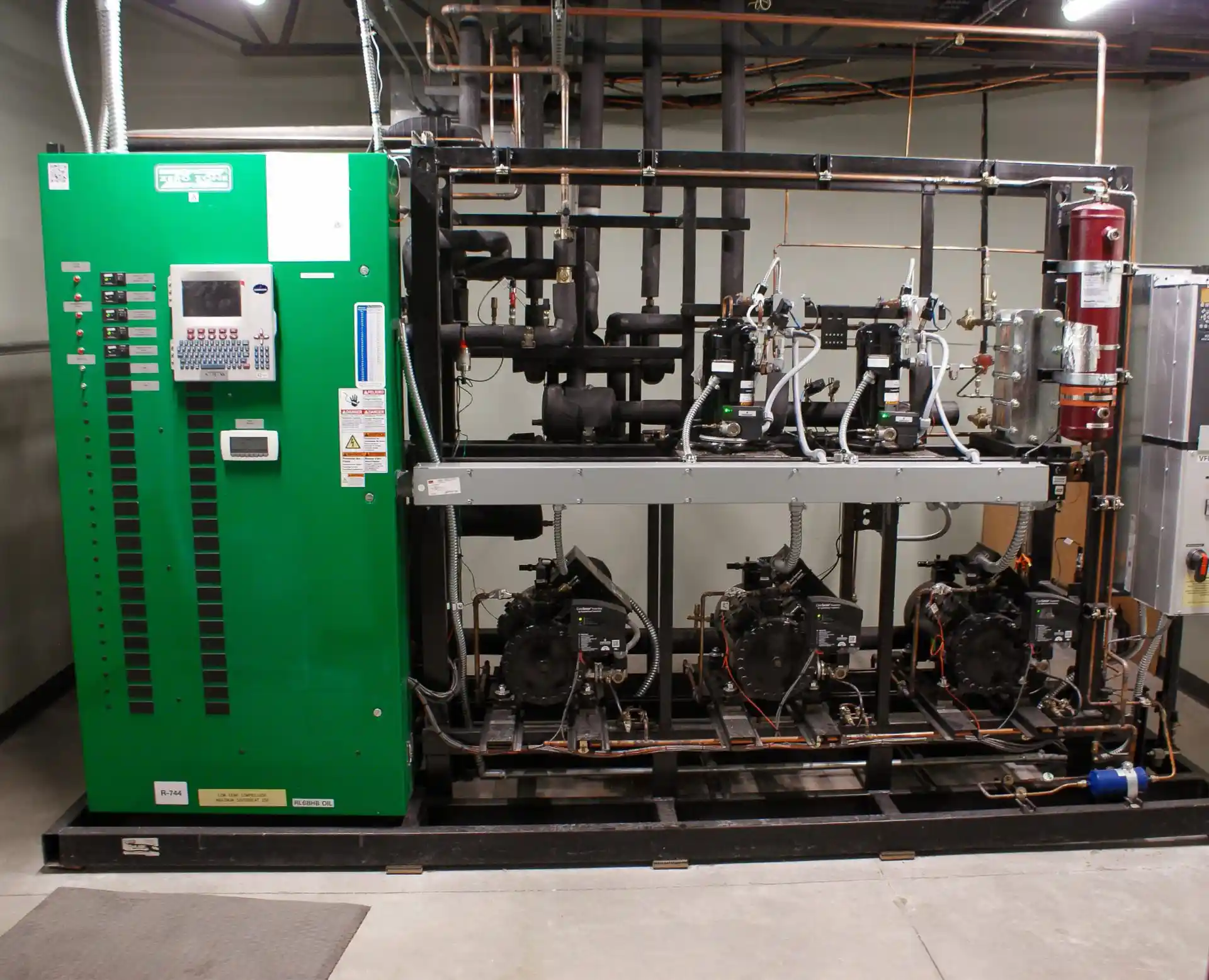
Indoor Parallel Systems
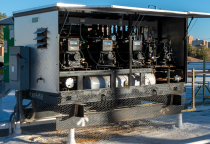
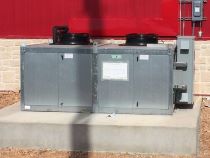
Outdoor Parallel Systems
Distributed Refrigeration Systems
Real World Examples
Here are some case studies of using Zero Zone’s CO2 Genesys™ Natural Refrigeration Systems in small format stores:
Small grocery store in Stapleton, CO
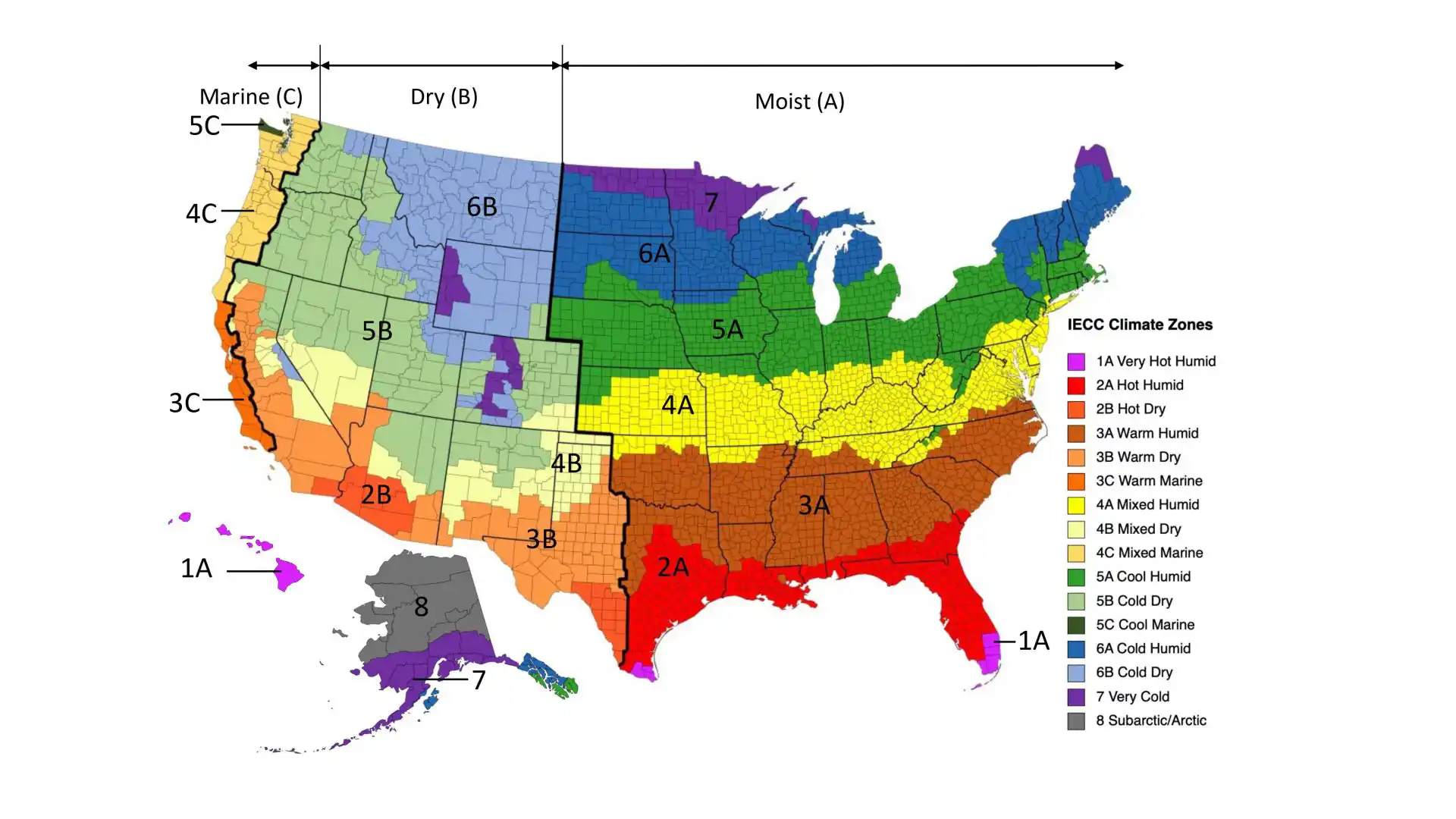
- Zero Zone completed this project using an indoor parallel system that can operate on a mezzanine in a mechanical room in a 5B climate zone. It has a remote adiabatic gas cooler, negating the need for air conditioning. The design pressure is 120 bar on the high side and 45 bar on the low side.
Small format store in Islandia, NY
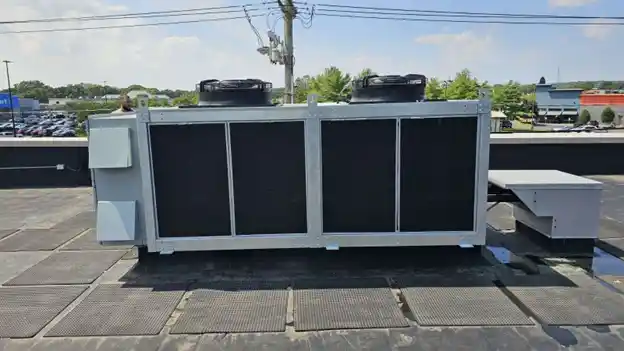
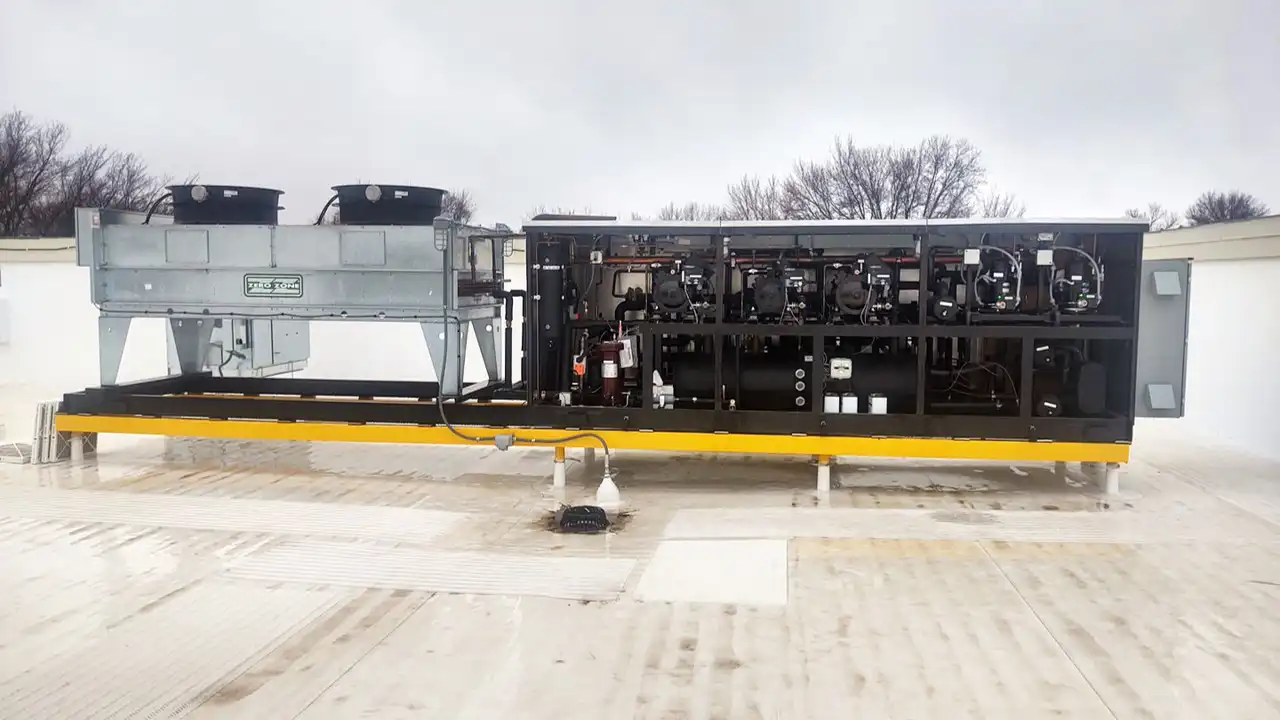
- This store is located in a 4A climate zone and home to one of Zero Zone’s outdoor parallel roof-mounted rack systems. This system has a remote air-cooled gas cooler and a design pressure of 120 bar high side and 90 bar low side.
Convenience Store in Dayton, MN
- Zero Zone also has an outdoor parallel system mounted on the roof in a 6A climate zone. This system measures 120 bar on its high side and 45 bar on its low side. This location also uses the heat reclaim for heating the backroom air coil and water.
A common myth surrounding CO2 as a refrigerant is that it can only be used in certain climates. This is true only for certain types of CO2 systems. Transcritical CO2 systems can only be used in cooler climate zones. Subcritical CO2 systems can be used in any climate zone. At Zero Zone, we have a solution for natural refrigerants in any climate.
Are You Ready for Zero Zone’s Genesys™ CO2 System?
To start a project or learn more about how Zero Zone can help, contact one of our sales representatives.
What is the AIM Act?
The American Innovation and Manufacturing Act (AIM Act) was passed in 2020 by bipartisan support in the U.S Congress as the United States joined the global movement to reduce human impact on climate change. The AIM Act directs the U.S. Environmental Protection Agency (EPA) to oversee the phasedown of HFC refrigerant production and consumption in an effort to transition to alternative refrigerants. The AIM Act includes a phasedown schedule that began in 2022 and continues to 2036.
The new rule prohibits the manufacture and import of self-contained products that use hydrofluorocarbons (HFCs). The rule also prohibits the sale, distribution, and export of products three years after the manufacture and import restriction. Finally, it prohibits the installation of new refrigeration air conditioning and heat pump (RACHP) systems that contain HFCs. The compliance dates of these new rules vary based on sector and subsector.
Who does the AIM Act refer to?
The final rule states, “Entities that manufacture, import, export, sell, distribute, or install systems or products that use HFCs in refrigerants and air-conditioning equipment systems, heat pumps, foams, and aerosols may be affected by this new rule. Restrictions apply to original equipment manufacturers, product distributors, retailers, and companies that direct the installation of new RACHP systems.”
Important definitions
The final rule makes a distinction between products and systems. Certain products and the installation of certain systems have different restrictions.
A product is functional upon leaving a factory. Examples of products include self-contained refrigerators and self-contained ice machines. The EPA is restricting the sale, distribution and export of products containing higher-GWP HFCs three years after the manufacture and import restriction dates.
A system is assembled and charged in the field using multiple components. An example of a system is a supermarket refrigeration system that include a centralized compressor room. Components include equipment such as compressors, condensers, and display cabinets. There is not a restriction on the manufacture, import, sale, distribution, or export of components that are used to repair existing systems.
When will the phasedown start?
Industrial Phasedown
Retail Phasedown
Notes:
- Industrial Process Refrigeration (IPR) systems are used to cool process streams at a specific location in manufacturing and other industrial processes (e.g., chemical, pharmaceutical, petrochemical, and manufacturing industries).
- Refers to the Zero Zone Hybrid™ display cases and rack condensing units (Edge XT).
- Refers to Zero Zone’s Highlight®, Crystal®, and Reveal® display cases and their associated systems.
Why was the AIM Act proposed and passed?
The AIM Act addresses petitions from industry, environmental organizations, and state governments to restrict the use of HFCs. The EPA has estimated the potential benefits of this rule will provide savings to American consumers and industry through energy efficiency and lower-cost refrigerants. The EPA stated that this rule will also result in greenhouse gas emissions reduction benefits.
- EPA estimations:
- Emission reduction of 876 million metric tons of carbon dioxide equivalent through 2050.
- $50.4 billion in climate change mitigation benefits
- $4.5 billion in cost savings to consumers and businesses driven by the lower cost of HFC substitutes and increased energy efficiency of lower-GWP refrigerants
For our customers
This rule does not restrict Zero Zone customers from using their existing refrigeration systems. The EPA has allowed an existing system to continue its operation to the end of its useful life. The systems may be serviced and repaired throughout their use, including replacing components. Components needed for repair are allowed to continue being manufactured.
For new installations, the equipment needs to be charged before the compliance dates. The following actions are considered a new installation:
- Assembling a system for the first time from used or new components;
- Increasing the cooling capacity, in BTU per hour, of an existing system; or
- Replacing 75 percent or more of evaporators (by number) and 100 percent of the compressor racks, condensers, and connected evaporator loads of an existing system.
Into the Future: Refrigerant Management
Although a system can be serviced until the end of its useful life, the refrigerants used to recharge it will become scarce as production slows. The costs of synthetic refrigerants are expected to rise. The EPA is currently working on a standard for refrigerant reclamation and requirements for reclaimed HFC refrigerants. They are proposing that as of January 1, 2028, reclaimed refrigerant must be used when servicing and/or repairing refrigerant-containing equipment. This includes supermarket systems and stand-alone retail food refrigeration.
If you have questions about these regulations, please contact Zero Zone and ask to speak to our Director of Regulatory Compliance & Refrigeration Technology, Bruce Hierlmeier.
How can Zero Zone Help?
At Zero Zone, we’ve always been green. Zero Zone offers sustainable refrigeration solutions with Genesys™ Natural Refrigeration Solutions. If you want to learn about our offerings and plans for these new regulations, contact our sales team or visit Zero Zone’s Genesys™ Natural Refrigeration Solutions webpage.
View the infographics for our Retail and Industrial customers for a summary of important facts and dates.
What changed?
The Environmental Protection Agency (EPA) finalized the phasedown schedule (above) for hydrofluorocarbons (HFCs), which is mandated by the American Innovation and Manufacturing Act (AIM Act). There were no changes between the proposal and the final rule. The schedule still calls for a segmented reduction in HFCs produced and consumed, ending in an 85% reduction by 2036.
The finalized rule includes an allocation and trading program, which determines the amount of refrigerant that may be produced and consumed. There were no changes between the proposal and the final rule.
Who is impacted by the AIM Act?
- Refrigerant Producers: Companies that produce, import, export, destroy, reclaim, or recycle HFCs are issued allowances by the EPA on October 1 of each year. These allowances are relative to the phasedown schedule.
- End Users: Companies that use refrigeration equipment—such as retailers, cold storage warehouses, and industrial process facilities—will feel an indirect impact because HFC refrigerant will be less common and more expensive.
We know from the recent phaseout of R-22 that this phasedown will cause refrigerant prices to rise. HFC refrigerants that are manufactured will primarily be used to service leaks in existing systems, plus HFC refrigerants are shared with other industries, such as air conditioning and foaming processing. This could impact cost and availability of refrigerants to retailers and industrial end users, meaning that budgets for repairs will need to increase.
What should retailers and other end users do?
To counteract this, Zero Zone recommends that future orders for refrigeration equipment should be switched to alternative refrigerants sooner than later, such as natural refrigerants and low-GWP HFO-based refrigerants. This will make service costs better in the long run. Plus, it will prepare end users for upcoming EPA rules that will further regulate refrigerants.
What other rules are coming?
The refrigeration industry awaits three more final EPA rules.
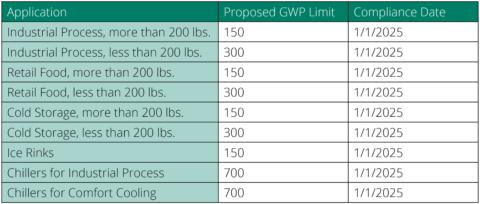
1) The EPA proposed a rule that will establish limits by 1/1/2025 on the global warming potential (GWP) of refrigerants. This rule must be finalized in October 2023. Below are the current GWP restrictions proposed.
These GWP limits will end the use refrigerants such as R-404A (GWP of 3943), R-407A (GWP of 1923), R-410A (GWP of 1924), R-448A (GWP of 1273), R-449A (GWP of 1282), and R-507 (GWP of 3985) in new equipment. Going forward, refrigeration equipment will need to use natural refrigerants, such as CO2 (GWP of 1), ammonia (GWP of 0), and HFO-based refrigerants with GWP less than the limits.
2) The refrigeration industry also awaits the release of EPA Rule 26, which will allow for the use of A2L refrigerants in commercial and industrial applications. “A2L” refers to an ASHRAE classification of refrigerants that are mildly flammable. Rule 26 would also increase the allowable R-290 (propane) charges for self-contained equipment.
3) The EPA will be updating Section 608 of the EPA Clean Air Act (CAA), which regulates handling, recovery, reclamation, and recycling of refrigerants. They are updating the rule for how service technicians can handle refrigerants and how refrigerant use is reported by store owners.
Further Reading
For more information about upcoming EPA regulations: “The National Plan for Refrigerant Regulations.”
For more information about current state regulations: “The State of Refrigerant Regulations.”
If you have questions about these regulations, please contact Zero Zone and ask to speak to our Director of Regulatory Compliance & Refrigeration Technology. If you want to learn about our offerings and plan for these regulations, contact our sales team.
Refrigeration Load Requirements & Challenges
Private label juice manufacturer Citrus Systems, Inc. specializes in pasteurizing an extensive line of juices and fruit drinks. The business provides juice to local dairies, grocery stores, and institutional customers. Their success and future contracts led them to build a new facility that is twice as large as their previous location. Consequently, this expansion presented several challenges for their refrigeration needs.
Large Capacity Needed
To accommodate their increased production, Citrus Systems required:
- 2 pasteurizers
- 6 packaging lines
- 18 blending and storage vessels
- Over 560,000 cubic feet of storage
- Doubled square footage from the previous facility
- A system that follows precise HACCP food safety guidelines from the FDA
The Zero Zone Refrigeration Solution
To meet these demands, Zero Zone provided three refrigeration systems:
- A low temperature rack offering 82 tons of cooling at -23°F
- A medium temperature rack providing 124 tons of cooling at +20°F
- A 4-circuit chiller delivering 240 tons of cooling at +18°F
Additionally, Zero Zone designed and built a package rack system to be installed on-site. To ensure food safety, the system includes remote monitoring and diagnostics.
The refrigeration systems are designed to provide trouble-free, energy-efficient operation for Citrus Systems’ production process. Zero Zone incorporated features and technology tailored to the needs of pasteurization plants, such as multiple chilling circuits, industrial PLC controls, and evaporative condensing with variable speed fan control. Furthermore, a heat reclaim system off the compressor discharge circuit reduces both electric and natural gas demand by repurposing heat for hot water used throughout the production facility.
Guaranteeing that the system always maintains the correct temperature is essential for Citrus Systems’ HACCP program. To monitor operations and communicate any alarm conditions, Citrus Systems implemented a remote diagnostics system connected to the refrigeration equipment. Consistency and dependability are crucial in the pasteurization and food processing industries to protect the quality of the final product.
A Satisfied Customer
Thomas E. Boehland, founder and president of Citrus Systems, takes great satisfaction in how everything came together, describing the equipment as “a work of art.” He praised the Zero Zone team: “You can tell that there is a lot of pride in what they put together. It isn’t just a bunch of refrigeration components cobbled together on-site to get the job done. It’s a nice package, and you can tell just by looking at it. The factory people take pride in it and even sign off on the equipment with each individual person putting their names to it. You don’t see that very often these days.” Boehland concluded by saying, “I’ve put my faith in Zero Zone to do what we need to be done.”
Contact our sales team to start on your next refrigeration journey.
Read more in the full case study: “An Industrial Work of Art.”
The Genesis of Refrigeration
Genesys™ Natural Refrigeration Solutions takes us back to the beginning. Carbon dioxide (CO2) and ammonia (NH3) have always been in our environment, and they have also always been part of the story of refrigeration. Both served as refrigerants in the 1800s. However, synthetic refrigerants emerged, causing their use to decline. Now, the AIM Act and upcoming EPA rules will propel the industry away from environment-damaging HFC refrigerants and toward low global warming potential (GWP) options. Consequently, natural refrigerants are once again a rising option for refrigeration.
Introducing Genesys™ Natural Refrigeration Solutions
That is why Zero Zone presents Genesys™ Natural Refrigeration Solutions. It is time to return to the beginning—the genesis—of refrigeration with CO2 (R-744) and ammonia (R-717) systems. CO2 and ammonia are the gold standard for ozone depletion potential (ODP) and global warming potential (GWP). Neither depletes the ozone (0). CO2 has a GWP of 1, as it is used as the baseline for that scale, and ammonia has a GWP of 0. For performance, CO2 is known for its high cooling capacity, and ammonia has a reputation for excellent energy efficiency. Natural refrigerants are a future-proof solution that exceeds modern sustainability goals, allowing customers to make the best choice for themselves and for the environment. Natural refrigerants are the natural choice.
The Time to Act is Now
Upcoming EPA regulations will end the use of most HFC refrigerants by 2025. Therefore, today is the day to choose Genesys™ Natural Refrigeration Solutions for your next project. For more information about the Genesys™ CO2 systems, watch our video and learn more at our website.
The American Innovation and Manufacturing Act (AIM Act) directs the Environmental Protection Agency (EPA) to regulate the transition to alternative refrigerants. It phases down the production and consumption of HFC refrigerants. The EPA has published a proposed rule that will prohibit the manufacture of equipment containing HFCs by January 1, 2025. It will also prohibit the sale of those products by January 1, 2026.
Read more about the AIM Act in 2025 here.
Which states are affected by the AIM Act?
This rule would apply to the entire country, bringing alignment instead of state-by-state regulations. States can still issue their own, more stringent regulations. Some states, like California and New York, will still require attention.
Which refrigerants are affected?
This rule proposes to restrict the use of refrigerants by their global warming potential (GWP). Equipment using more than 200 lbs. of refrigerant will face a GWP limit of 150. Equipment using less than 200 lbs. of refrigerant will face a GWP limit of 300. Chiller systems will face a GWP limit of 700.
These GWP limits will end the use of refrigerants like R-404A (GWP of 3943), R-407A (GWP of 1923), R-410A (GWP of 1924), R-448A (GWP of 1273), R-449A (GWP of 1282), and R-507 (GWP of 3985) in new equipment. Refrigeration equipment will need to use natural refrigerants, such as CO₂ (GWP of 1) and ammonia (GWP of 0). HFO-based refrigerants will also be used since they have options below the proposed GWP limits.
When will the AIM Act ruling be finalized?
Currently, the proposed rule is available for comments until January 30, 2023. The rule will be finalized in October 2023. We do not expect the GWP limits to change. However, the implementation date might get pushed back to help manufacturers and end users complete existing projects. Industry leaders are asking for clarification about how the implementation dates are defined. They also seek clarification on how “new projects” will be defined compared to retrofit or remodel projects.
Further Reading
Zero Zone has a new paper, “The National Plan for Refrigerant Regulations,” which has more information about the upcoming EPA regulations, which states will still have regulations to follow, and solutions that Zero Zone offers.
To know where we have come from, Zero Zone has a paper, “The State of Refrigerant Regulations,” which covers state regulations that affected the United States from 2019 through 2024.
The proposed rule and a succinct fact sheet are available on the EPA website: https://www.epa.gov/climate-hfcs-reduction/technology-transitions.
If you have questions about these regulations, please contact Zero Zone and ask to speak to our Director of Regulatory Compliance & Refrigeration Technology. If you want to learn about our offerings and plan for these regulations, contact our sales team.
NASRC Factsheet on Natural Refrigerants
The North American Sustainable Refrigeration Council (NASRC) recently published a factsheet outlining the impact of natural refrigerants on supermarket refrigeration. We aim to circulate this factsheet to ensure people do not miss this valuable resource and reminder of the benefits of natural refrigerants. The NASRC advocates for natural refrigerants. In their words, “Natural refrigerants are the climate-friendly solution to mitigate supermarket HFC emissions.”
Zero Zone Natural Refrigerant Systems
Zero Zone offers natural refrigerant systems using CO₂ or ammonia. Our equipment serves both commercial and industrial settings, ranging from 5 tons to 500 tons. Additionally, our Natural Refrigerant Systems product sheet demonstrates the variety of systems we have designed and put into service. We provide CO₂ and ammonia system solutions to meet various requirements for cold storage, food processing, pharmaceutical operations, and supermarkets. Furthermore, we incorporate secondary glycol loops, air-cooled or water-cooled condensing, heat reclaim systems, and more.
CO₂ Systems
We offer CO₂ subcritical and CO₂ transcritical systems. CO₂ systems can be indoors or outdoors, set up inside custom electrical mechanical centers (CEMCs), built as full racks or condensing units, and be part of booster systems and cascade systems. This versatility unlocks CO₂ as a viable solution for warm and cool climates for all sorts of customers, and Zero Zone has been shipping these systems across the United States with great results.
Ammonia Systems
Ammonia is a great choice for industrial customers and ice arenas. Low-charge ammonia systems can be utilized indoors, outdoors, and in CEMCs. We have many years of experience and knowledge in ammonia, and we are ready for your project.
EPA Regulations and Assistance
With increasing EPA regulation limiting the continued use of HFC refrigerants, Zero Zone is eager to assist you with deciding which natural refrigerant system would be best adapted to your specific application. Begin a conversation with us. Contact your local Zero Zone sales rep today.
What is the best refrigerant for my system? As government regulations push the industry away from high global warming potential (GWP) refrigerants towards low GWP options, now is the right time for natural refrigerants. Zero Zone natural refrigerant systems provide the solutions you need to meet your objectives and government regulations. A couple recent projects include a CO2 transcritical system for Rufus Brubaker Refrigeration and an ammonia chiller for Air Management Technologies.
System Facts: 200-Ton CO2 Transcritical System
- Customer: Rufus Brubaker Refrigeration
- State: Pennsylvania
- Application: Process refrigeration
- System Type: Parallel system located indoors
- Capacity: 150 tons used for medium temp, 50 tons used for low temp
- Features: Parallel compression, adiabatic gas cooler, hot gas defrost
- Energy Savings: Heat reclaim for facility water
CO2 refrigerant (R-744) grows increasingly important to the refrigeration industry as a natural replacement for high GWP refrigerants. Improvements to CO2 transcritical technology make CO2 feasible and reliable in more regions, including Pennsylvania where this new system is located. CO2 compressor discharge offers high-quality heat that can be repurposed through a heat reclaim system. Rufus Brubaker’s customer uses that reclaimed heat for their facility’s warm water.
John Collins, Industrial Sales Manager – East for Zero Zone, commented that “Rufus Brubaker is a longtime customer of Zero Zone. When they made the decision to pursue CO2 refrigeration for their customer, they came to Zero Zone as a trusted partner to deliver a successful project. Our team worked closely with Rufus Brubaker all the way through design concept, fabrication, installation, and start-up to assure a smooth project delivery and satisfied end user.”
System Facts: 150-Ton Ammonia Chiller
- Customer: Air Management Technologies
- State: Illinois
- Application: Process chilling
- System Type: Outdoor parallel system (OPS) configuration
- Capacity: 150 tons used for process cooling
- Features: Screw compressors, adiabatic condenser, low-charge plate chiller heat exchanger
- Energy Savings: VFD compressor control and DC motor condenser control
A large food processing organization globally recognized for their environmental and sustainable processes chose to install a low-charge ammonia (R-717) chiller manufactured by Zero Zone as part of a worldwide R-22 equipment phase-out. The low-charge ammonia chiller was selected to meet health and safety standards for both their employees and the surrounding neighborhood community. The package chiller was customized to provide the same low temperature glycol refrigeration capabilities of chemical refrigerant chillers while exceeding target GWP objectives. John Collins chimed in that choosing ammonia “is a future proof and environmentally friendly solution.”
Making an Educated Decision
There are many practical reasons to still consider HFCs. Traditionally, HFCs are seen as a low cost and familiar option. However, it is sometimes difficult to know where HFCs can be used because high GWP refrigerants are being increasingly regulated by individual states. To get started on understanding HFC restrictions, read our news article and white paper about state refrigerant regulations.
Likewise, there are many practical reasons for using natural refrigerants. CO2 is one of the safest refrigerants to use. Ammonia systems are some of the most efficient and have been used safely in industrial applications for many decades. Both CO2 refrigerant and ammonia refrigerant are readily available. Of course, the biggest benefit to natural refrigerants is that they are environmentally sound and meet global sustainability goals.
So, if either synthetic refrigerants or natural refrigerants can be reasonable choices, how do you know which to pick? A good place to begin is by contacting your local Zero Zone sales representative and starting a conversation. They will help you select the best refrigerant for your needs, whether it is synthetic or natural. Fill out a contact form or give us a call (cases 800-247-4496; systems 800-708-3735). We would love to talk refrigerants with you.



 Notes: