
Behind the Chill: Understanding Refrigeration

Refrigeration is an essential, often taken for granted, part of modern life. Whether at a massive industrial scale or in a household kitchen anyone could tell you the importance of refrigeration in their lives, or at least, how much pain life becomes when their home refrigerator goes on the fritz.
No matter the size, from a compact household refrigerator to a large industrial cooling system, all refrigeration systems rely on the same core components. In this blog, we will break down those key components and explain how each one contributes to the greater cooling process.
Understanding Heat Transfer
At its core, refrigeration is a process meant to remove heat from one area and expel it into another. Think of this like a sponge moving water from a bucket into a sink. If you put a sponge into a bucket full of water, the sponge will absorb some of the water and expand. If you were to then move the sponge to the sink and squeeze, the pressure of your hand would force the water out of the sponge.
Refrigeration works the exact same way. The refrigerant inside of a refrigeration system absorbs the heat when depressurized and expels heat when pressurized. By continuously pressurizing in one location and depressurizing in another, the refrigeration system can remove a significant amount of heat from an area, creating a cooled environment within an insulated space.
The Cooling Loop
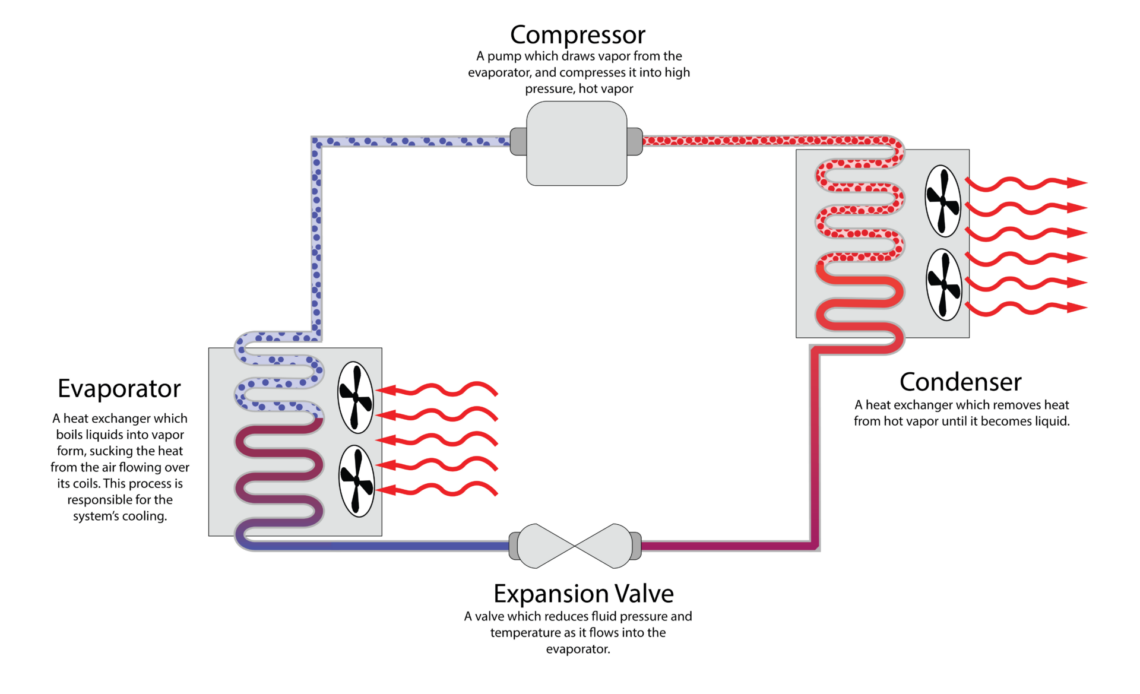
Of course, heat transfer is far more complex than a sponge. Refrigeration requires many different components working together to control the refrigerant’s absorption and release of heat. This controlling process is called the Cooling Loop.
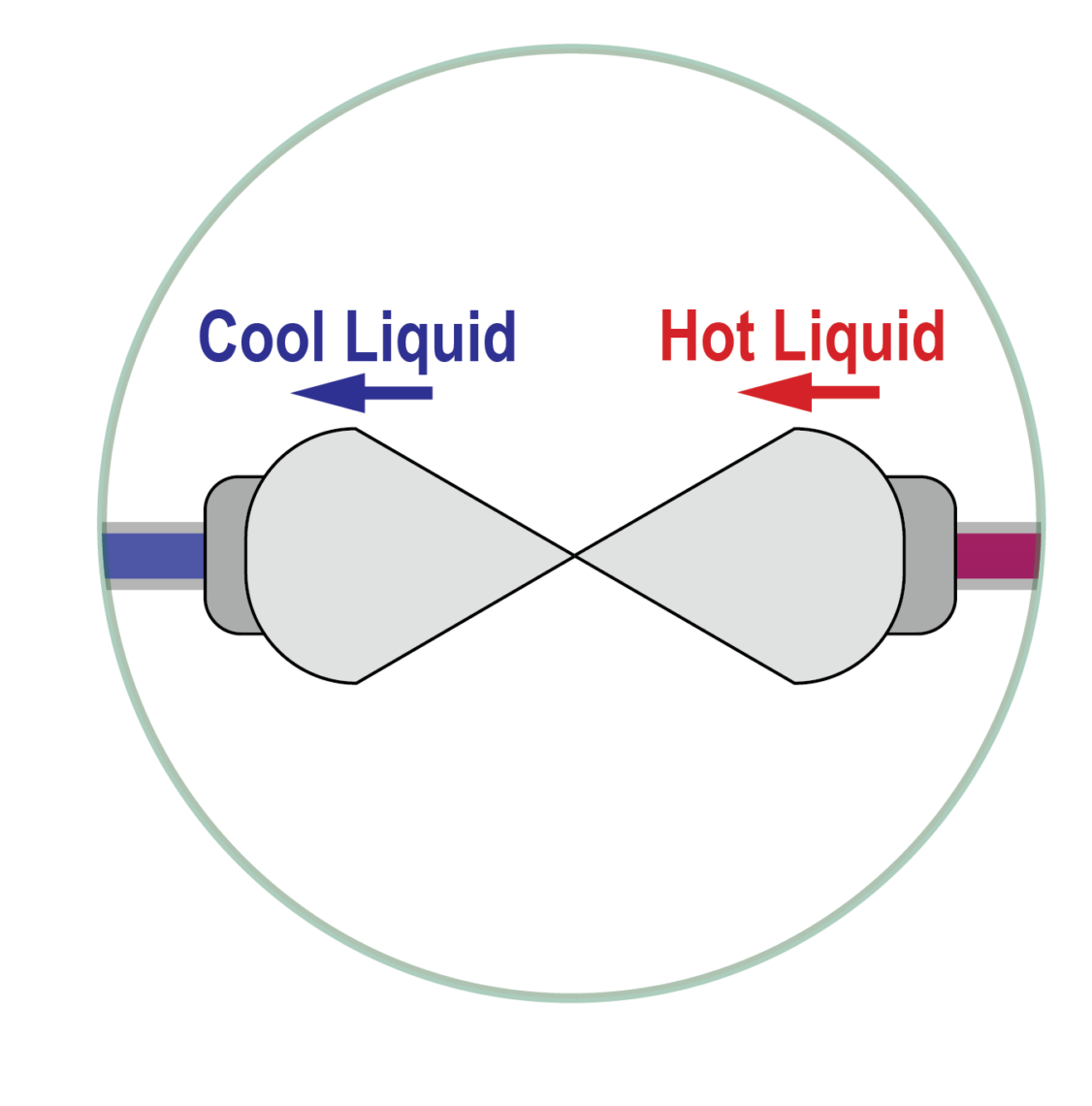
The cooling loop is made up of four primary components: the compressor, the condenser, the evaporator, and the expansion valve.
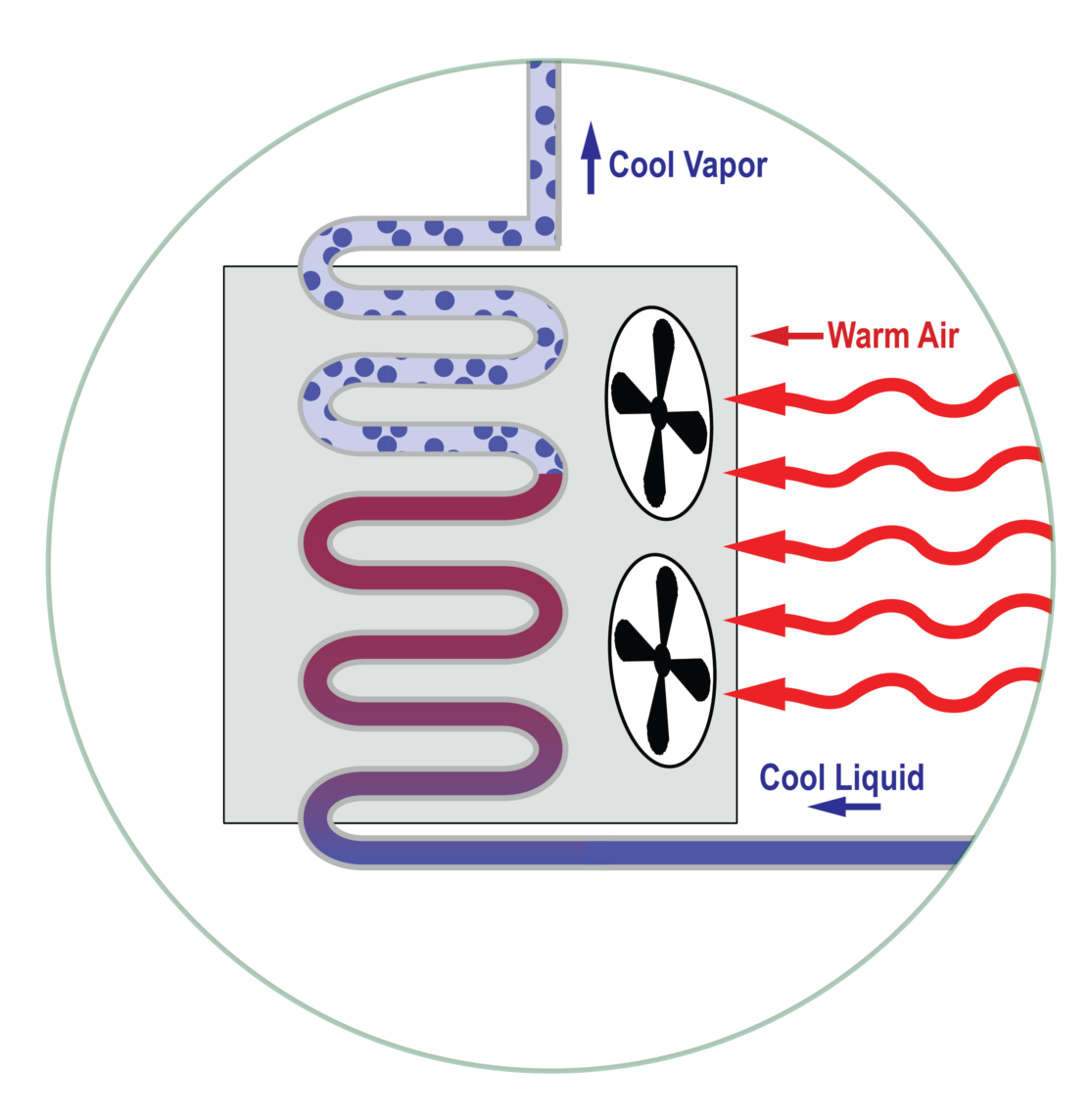
The Evaporator
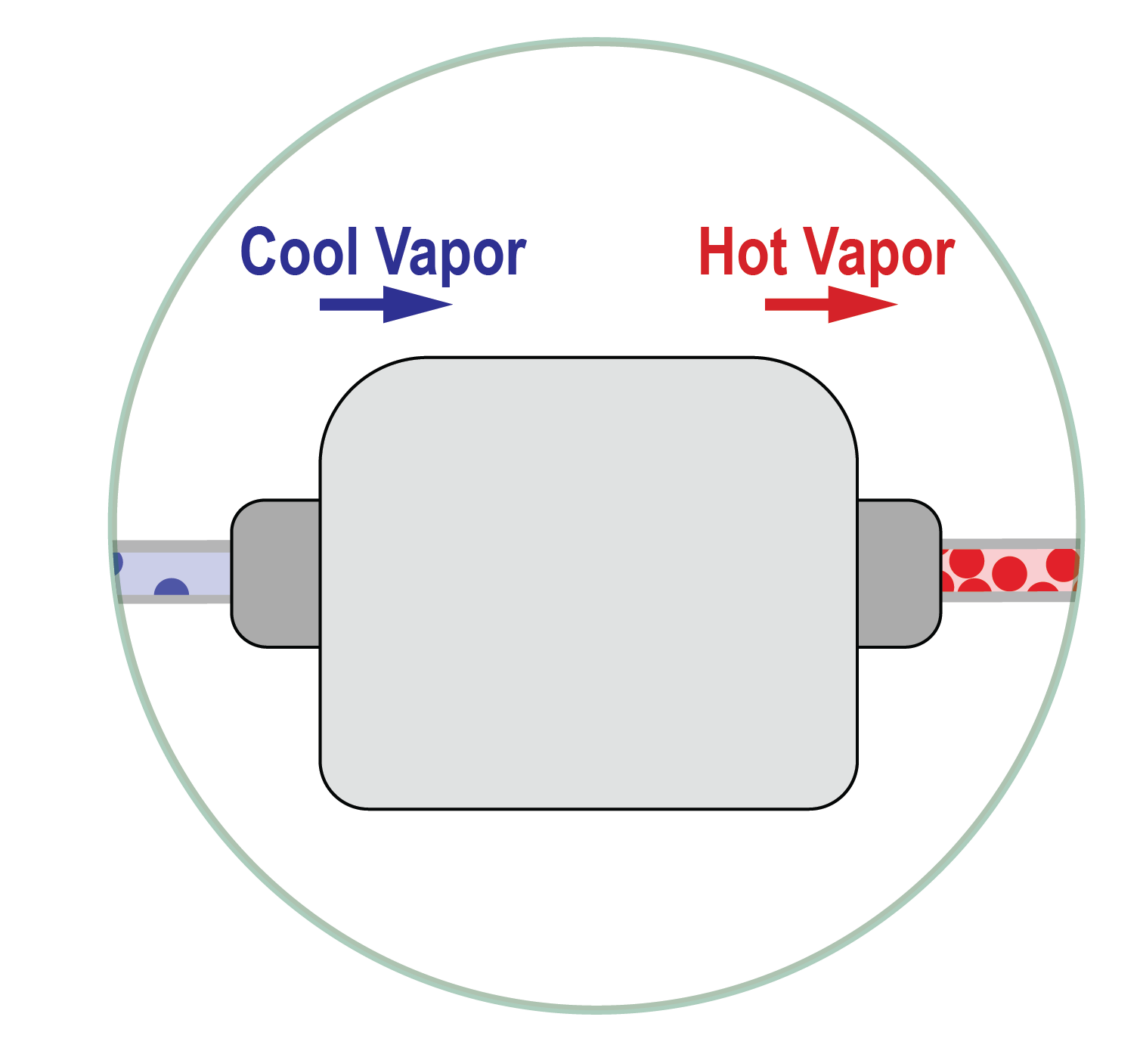
The Compressor
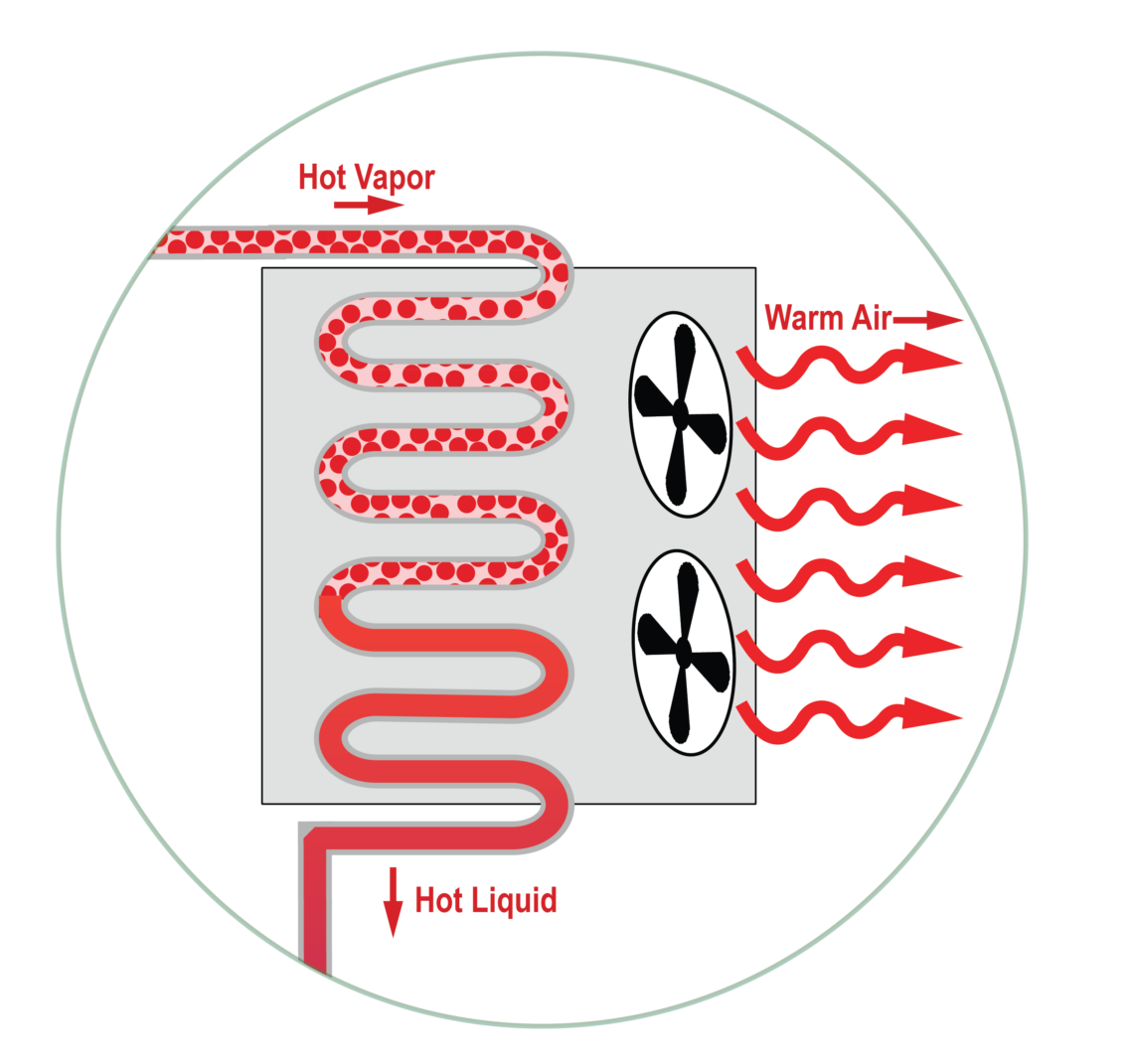
The Condenser
The Expansion Valve
The Refrigerants
Carbon Dioxide
Carbon Dioxide, known as R744 in the refrigeration industry, is a natural refrigerant with low global warming potential. CO2 systems require very high pressure to operate efficiently but are very effective for large to medium-scale applications.
Propane
Propane, also known as R290, is a natural refrigerant that is common in self-contained refrigerators and is very energy efficient. Because propane is flammable, use of this refrigerant is restricted to small applications.
Ammonia
Ammonia, also known as R717, is a natural refrigerant that is highly effective in industrial applications. However, it is also toxic and requires strict safety standards and mitigation technologies.
Hydrofluorocarbons (HFC)
Hydrofluorocarbons are a class of refrigerants that are widely used by nearly every HVAC and refrigeration application. HFCs have been the most common refrigerants for decades, but recent climate regulations have been slowly phasing them out due to their high global warming potential.
Hydrofluoroolefins (HFO)
Hydrofluoroolefins are a class of refrigerants designed as a non-natural alternative to HFC refrigerants. A sub-class of HFO refrigerants called A2L refrigerants are becoming a popular option for refrigeration systems due to their low global warming potential.
Want to Learn More?
Who Are We?
Zero Zone provides personalized guidance and proven solutions for both retail and industrial customers. Our commitment to innovation, safety, and sustainability ensures your business remains compliant and competitive as the industry changes.
For more details on Zero Zone’s refrigeration solutions, visit our products page or connect with a sales rep today.