
Open-Deck Merchandisers: Protecting Product or Feeding the HVAC?
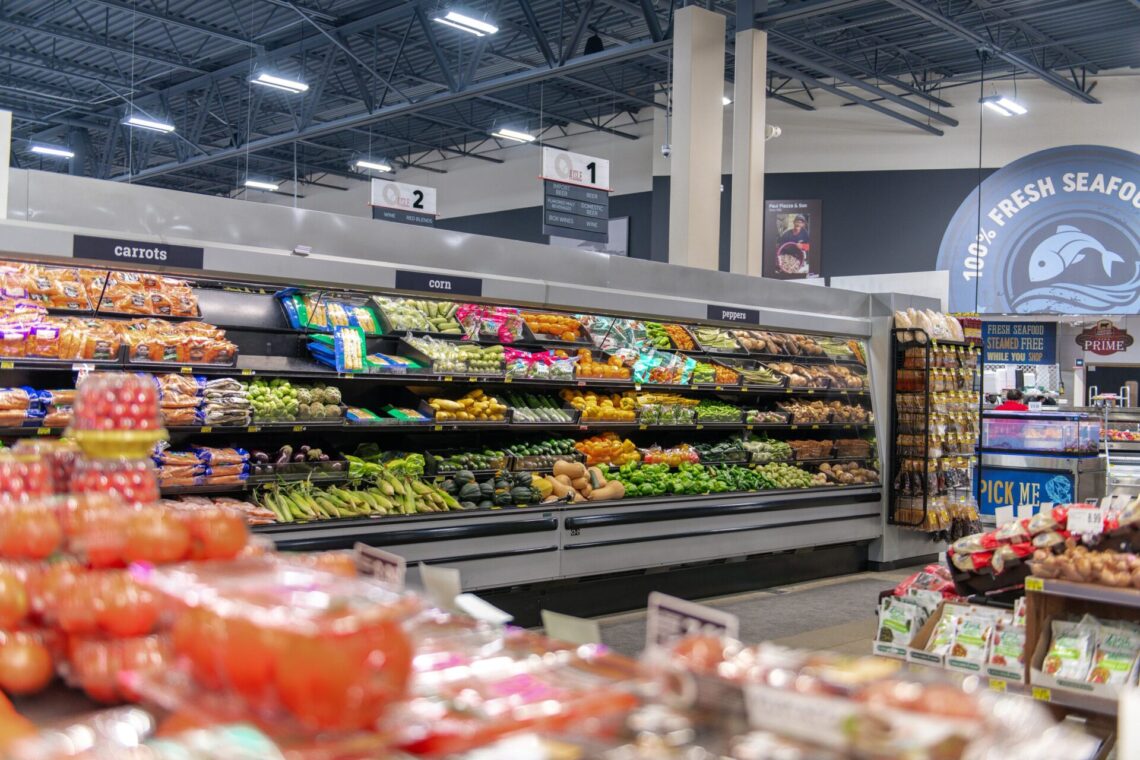
Open-deck refrigerated merchandisers rely on one of the most important systems shoppers rarely notice: the cold air curtain. Rather than using physical doors to separate refrigerated product from the surrounding store environment, open cases depend on a carefully engineered flow of air to maintain product temperature while preserving accessibility.
When that airflow performs effectively, it helps create a stable thermal boundary between refrigerated product space and the sales floor. When performance begins to break down, however, the effects can extend well beyond product temperature. Escaping air can influence shopper comfort, while warm ambient air entering the case can increase refrigeration demand. HVAC systems may then compensate to stabilize store conditions, increasing interaction between refrigeration and building climate systems.
This makes air curtain performance more than a case-level function. It is a system-wide operational consideration that can influence energy efficiency, merchandising flexibility, and long-term store performance. In modern retail environments where refrigeration and HVAC systems must operate as part of broader performance strategy, maintaining that invisible boundary becomes increasingly important.
How Do Air Curtains Work in Open Refrigerated Display Cases—and Why Performance Varies
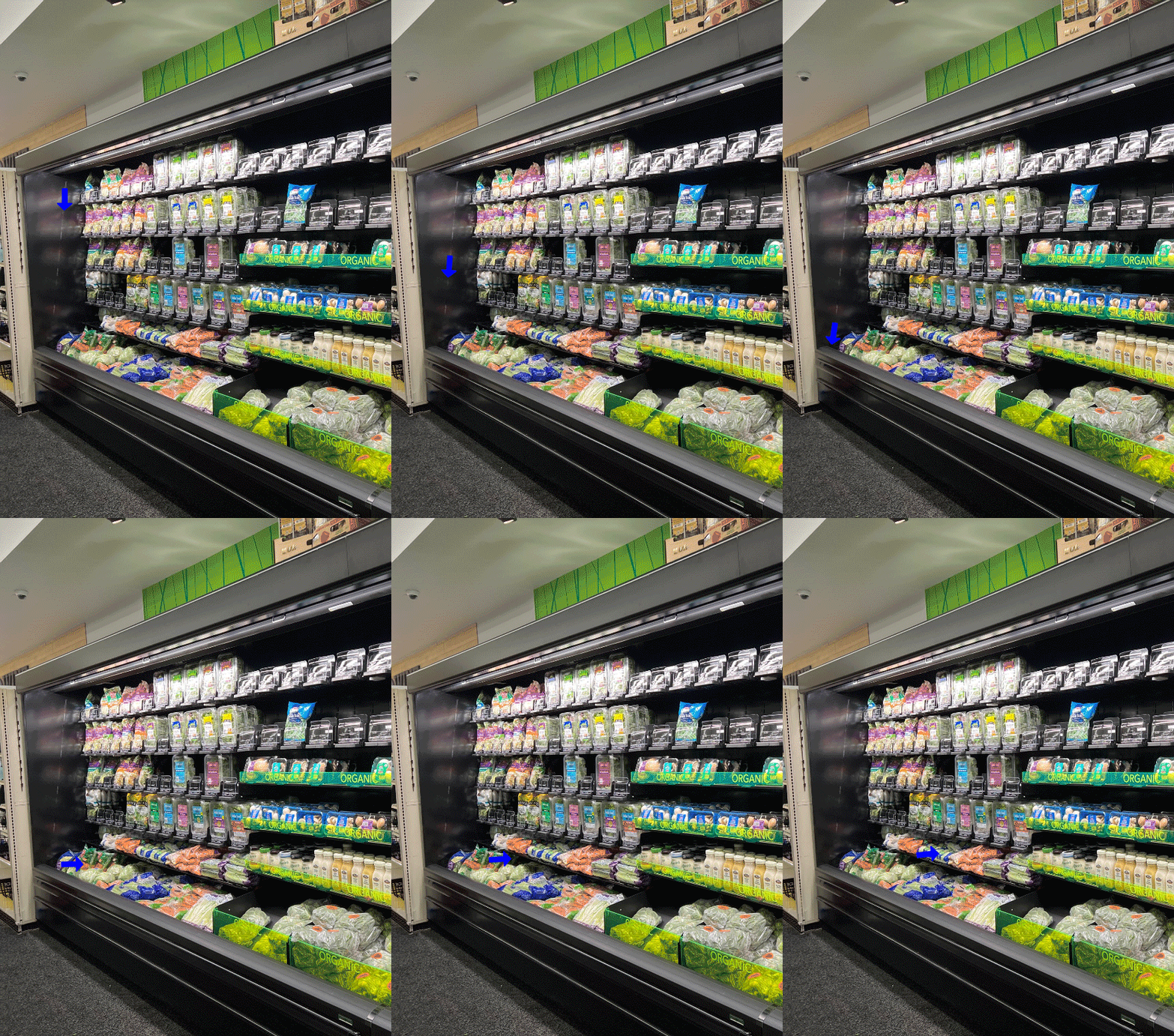
In open-deck refrigeration, the air curtain is not simply moving cold air. It is an engineered component of overall system design.
Effective air curtains must balance multiple performance variables simultaneously. Airflow must be carefully controlled to protect the product, resist ambient air intrusion, and maintain structural stability from discharge to return. If airflow velocity is too aggressive, it creates turbulence that will mix with the ambient conditions of the store and reduce performance. If too weak, the curtain may not reach the air grill for recirculation. In either case, refrigeration systems may work harder while surrounding HVAC systems respond to changing store conditions.
This balance is why air curtain performance is best understood not as an isolated airflow function, but as part of broader refrigeration system strategy. Stability on how airflow, case geometry, shelving design, and real-world merchandising conditions work together.
Shelf depth, edge profiles, product packout, and accessory integration all influence airflow behavior. Supporting consistent performance requires case platforms designed to preserve airflow under evolving retail demands, not simply ideal operating conditions.
Features such as shelf-edge air foils can further support this strategy by helping guide airflow and preserve curtain structure, reducing unnecessary mixing while supporting product protection and operational efficiency.
How Do Merchandiser Flexibility and System Performance Work Together in Retail Refrigeration?
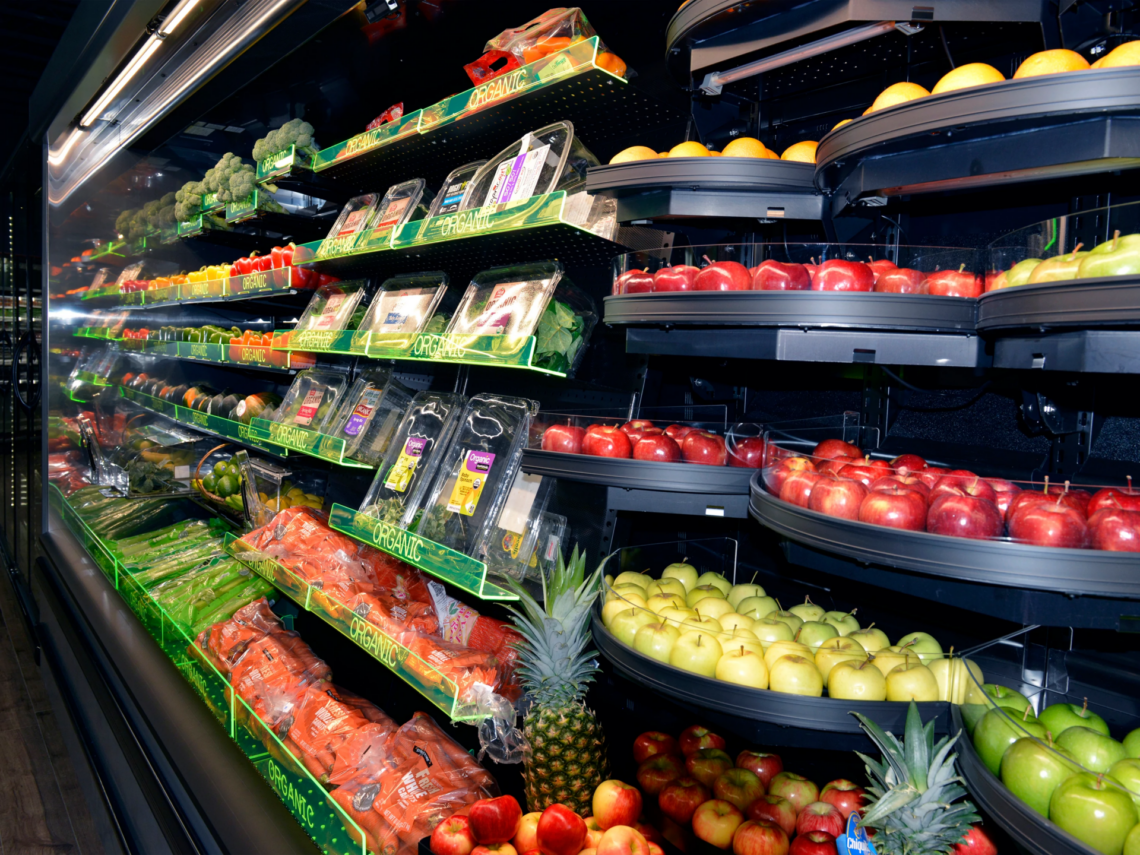
Retail environments are dynamic. Product assortments shift, merchandising strategies evolve, and shelving configurations often change over time. Because these changes can influence airflow behavior, it is critical to design an air curtain that supports merchandising flexibility.
The Reveal Merchandiser® by Zero Zone is designed with this operational reality in mind. By supporting multiple shelving depths, positions, and accessory options, the Reveal® product line helps retailers align merchandising adaptability with airflow-conscious design.
Rather than treating merchandising flexibility and case performance as competing priorities, this approach supports both. Retailers can configure cases to meet changing display case needs while maintaining greater control over the airflow conditions that support air curtain integrity.
Optional airflow accessories, including shelf-edge air foils for open cases, further extend this capability by helping stabilize airflow where it is often most sensitive. The result is a more adaptable case platform designed to support operational consistency across changing retail conditions.
An Invisible Boundary Supporting Long-Term Performance
In many ways, the success of an open-deck merchandiser depends on how effectively it manages what customers cannot see.
A stable air curtain helps support product protection, shopper comfort, and system-wide efficiency by limiting unnecessary interaction between refrigeration and surrounding store air. When that boundary is preserved, refrigeration systems can operate more consistently, HVAC systems face less compensatory demand, and the meat and produce remain at safe temperatures.
When that boundary weakens, the consequences can ripple outward: increased energy demand, inconsistent temperatures, reduced comfort, lost product, and greater strain on interconnected systems.
As refrigeration system design continues to evolve alongside efficiency goals and operational expectations, merchandiser platforms that prioritize airflow stability, configuration flexibility, and integrated performance strategy can play an increasingly important role.
The goal is not simply moving cold air. It is supporting a more complete refrigeration strategy designed for product protection, operational adaptability and the future of system performance.
To learn more about Zero Zone products and offerings, visit our products page or contact a sales representative today.